
Engineered vs. Solid Hardwood Floors
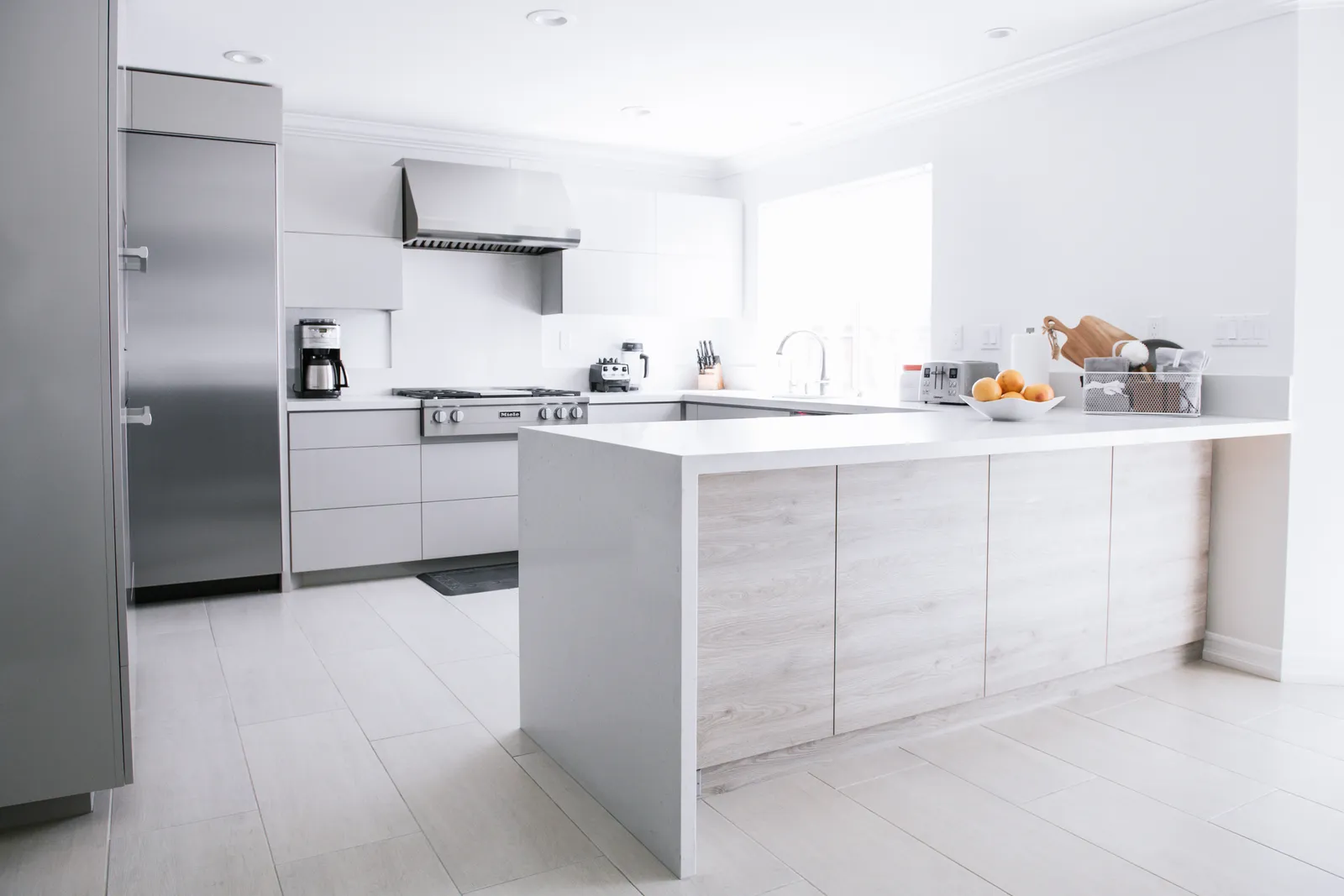
Stand two flooring samples side by side — one solid hardwood, one engineered — and you almost certainly can't tell them apart. Same species, same stain, same texture underfoot. The difference is hiding below the surface, and it matters more in San Diego than the showroom will tell you.
If you've already decided real wood is the answer (and if you're still weighing wood against vinyl plank, our honest comparison is the place to start), the engineered-versus-solid question is the next fork in the road. Here's how we help clients think it through.
Two constructions, one look
Solid hardwood is exactly what it sounds like: a plank milled from a single piece of lumber, usually three-quarters of an inch thick, nailed down to a wood subfloor. It's the traditional product, and it expands and contracts as a single piece of wood does — across its width, with every swing in humidity.
Engineered hardwood puts a layer of real hardwood — the "wear layer" — on top of a cross-laminated plywood core. Because the layers run in alternating directions, the plank is far more dimensionally stable. It can be glued directly to concrete, floated, or nailed, and it shrugs off moisture swings that would make a solid floor cup or gap.
Both are genuine wood where your feet and eyes meet them. The difference is everything underneath.
What's under your floor decides more than taste does
Here's the part that surprises people: in much of San Diego, the house has already voted. The midcentury ranches that fill Clairemont, Allied Gardens, and San Carlos mostly sit on slab-on-grade foundations — concrete, no wood subfloor, nothing to nail into. On a slab, engineered is the practical answer, glued down after the concrete is tested for moisture. Solid hardwood over a slab requires building up a subfloor first, which costs height, money, and awkward transitions at doorways.
Older neighborhoods tell a different story. The Craftsman bungalows and Spanish revivals of North Park, Kensington, and South Park often have raised foundations with wood subfloors — exactly what a nail-down solid floor wants. If you own one of these houses and love the idea of a floor that could be sanded and refinished for generations, solid is very much on the table.
Refinishing and the long game
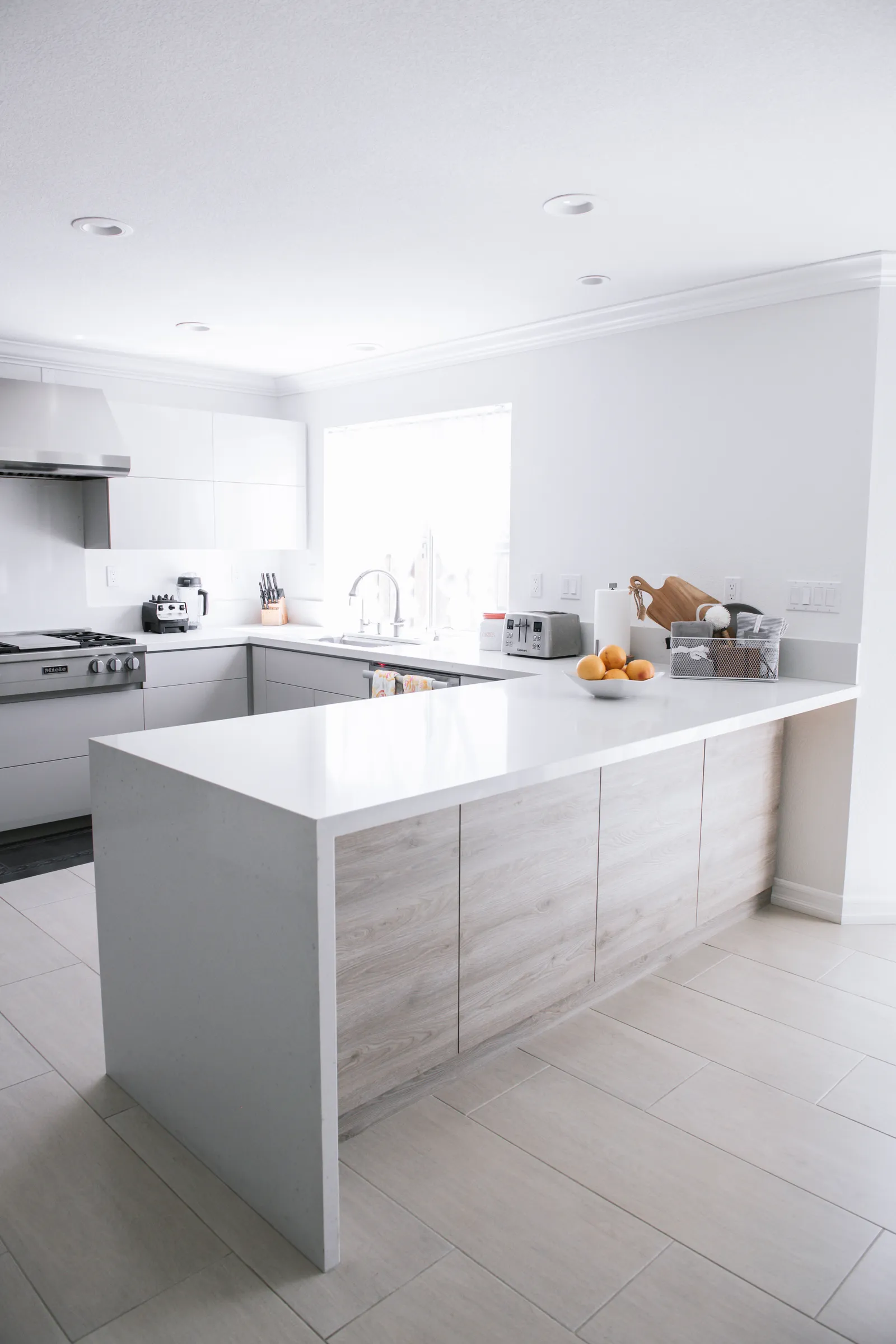
Solid hardwood's superpower is longevity: it can be sanded and refinished many times over its life. Engineered can too — but only as many times as its wear layer allows. That layer ranges from paper-thin to a robust several millimeters, and the difference determines whether the floor can be refinished twice, once, or never. It's the single most important question to ask about any engineered product, and the spec sheet buries it.
There's also a stability trade-off that cuts the other way. Today's popular wide-plank looks — six inches and up — are much better behaved in engineered form. A wide solid plank has more wood to move, and even our mild coastal humidity cycle, from damp June-gloom mornings to bone-dry Santa Ana weeks, is enough to open seasonal gaps. As last year's unusually wet winter reminded a lot of homeowners, moisture always finds the material that handles it worst.
How to choose without second-guessing
A shortcut that serves most of our clients well:
- Slab foundation, wide planks, or floors running into a kitchen? Engineered, with the thickest wear layer the budget allows.
- Raised foundation, classic widths, and a plan to stay for decades? Solid earns its keep.
- Either way: judge quality by construction, not by which category it's in. A premium engineered floor outlasts a cheap solid one.
Flooring decisions ripple through a project — transitions, door clearances, baseboards — which is why we settle them early in a whole-home remodel rather than at the end. If new floors are part of a bigger vision for your house, request a consultation or give us a call — we'll help you pick the floor your foundation, and your future, actually want.
Design · Build · Integration
Let's build something beautiful.
Call (619) 334-3322 or request your free design-build consultation.