
Landscape Lighting: Extending Evenings Outside
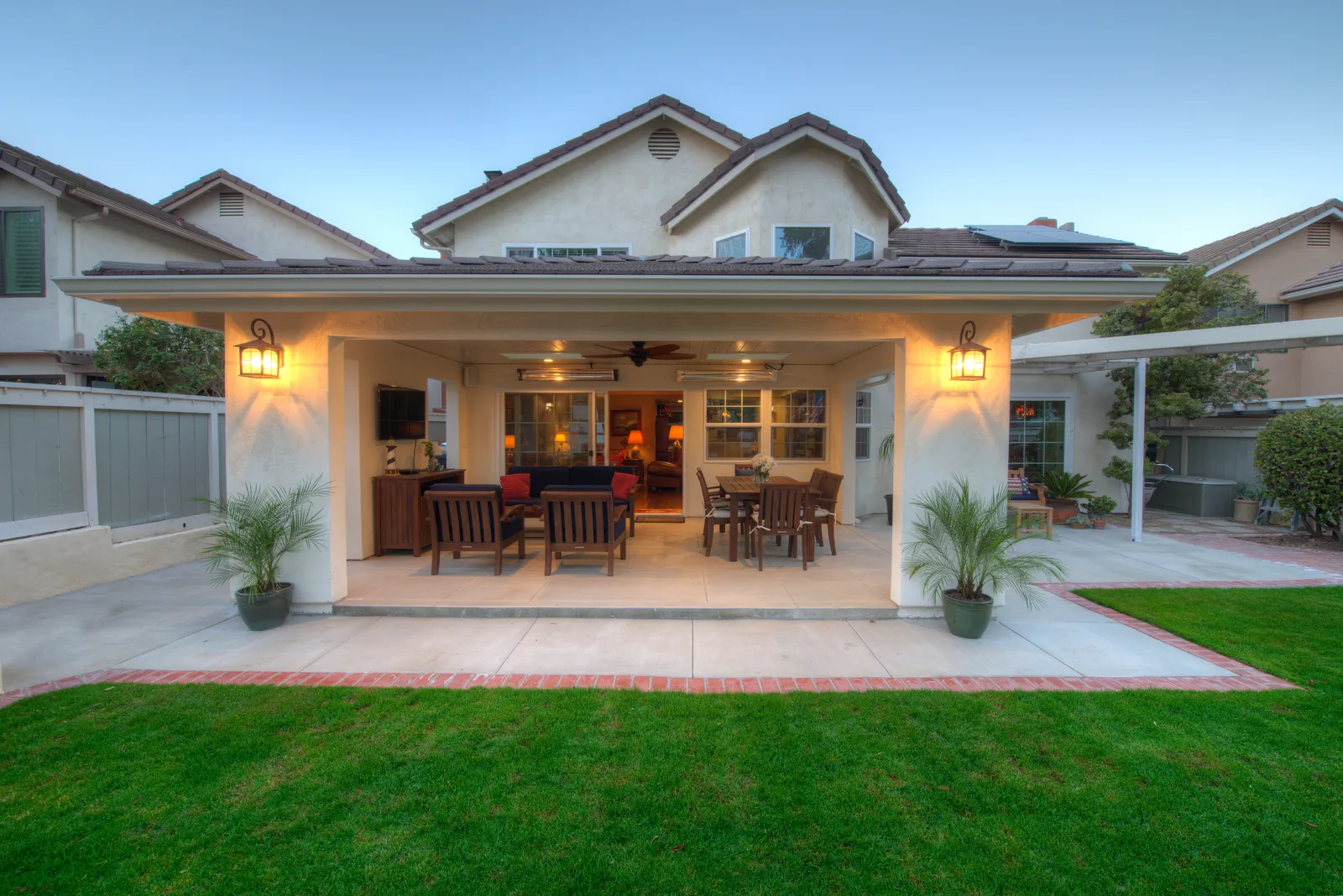
Late June in San Diego is the best argument for landscape lighting there is. The marine layer burns off, the evenings hover in the low seventies, and the sun still quits around eight — which means the most pleasant hours in your backyard happen in the dark. A patio you can't see is a patio you don't use.
The fix isn't a floodlight on the eave. It's a handful of small, well-placed decisions — most of which are cheapest to make while an outdoor project is already underway.
Think in layers, not fixtures
Good exterior lighting borrows the same logic as a whole-home lighting plan: layer several kinds of light instead of blasting one. Outside, the layers look like this:
- Path and step lights for safe footing — low, shielded, and spaced generously rather than lined up like a runway.
- Uplights grazing a mature tree, an olive trunk, or a textured stucco wall. This is where the drama lives.
- Task light at the grill and outdoor counter, bright enough to tell medium-rare from rare.
- Overhead ambience — string lights or fixtures under a pergola — to hold people at the table after dinner.
A yard with three modest layers feels far more inviting than one with a single bright source and hard shadows everywhere else.
Wire it while the ground is open
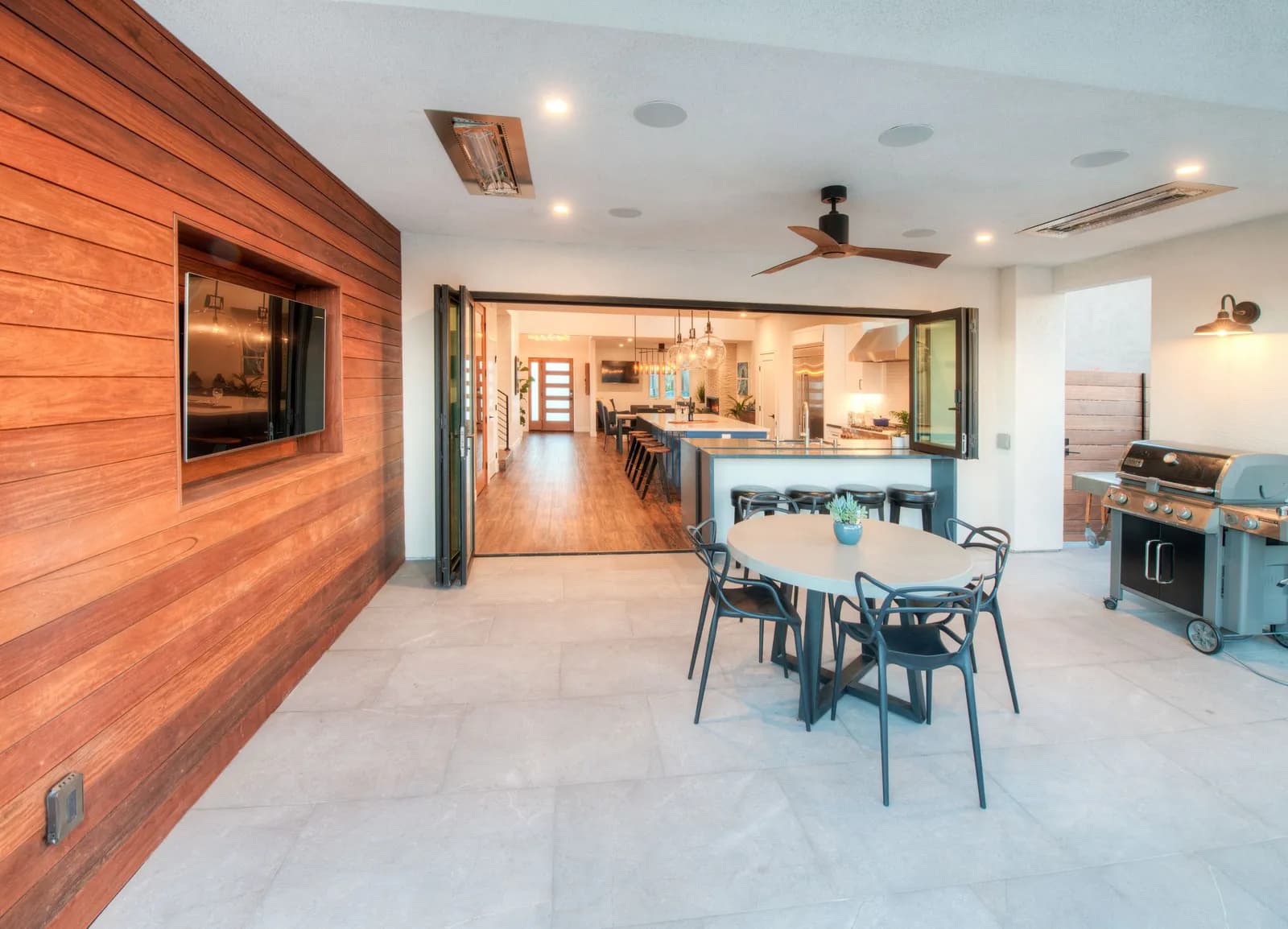
Modern landscape lighting is almost all low-voltage LED, which is forgiving to install — but the moment to run wire and conduit is before new concrete, pavers, or turf go down, not after. When we build an outdoor living space, lighting circuits, transformer locations, and a few spare conduits go into the plan alongside the gas line and the drainage. A patio cover framed with wiring in place can gain fixtures for years; one framed without it never quite catches up.
The same logic applies to a future fire feature or kitchen island: sleeves under hardscape cost almost nothing on pour day and a small fortune once the concrete cures.
Glare is the enemy
The most common mistake we see isn't too little light — it's light you can see the source of. Choose shielded fixtures, aim them away from sight lines and neighbors' windows, and keep color temperature warm; cool white light makes a garden look like a parking lot. Less light, better placed, always wins.
One coastal note: if you live west of the 5 — or anywhere the marine layer parks overnight — fixture material matters. Salt air chews through bargain finishes in a couple of seasons, while solid brass and copper just weather into a patina. It's one of the few places in a backyard where paying more up front genuinely costs less over ten years.
Finally, give the system controls you'll actually use: a photocell or timer, a couple of zones, and a dimmer. Then it runs itself — on at dusk, softened after dinner, off when the house sleeps.
For a deeper look, see Fire Pits and Outdoor Fireplaces: Rules and Options.
If your backyard disappears at sundown, this is the season to change that. Tell us what you're planning or give us a call — we'll design outdoor evenings you'll actually use, all year long.
Design · Build · Integration
Let's build something beautiful.
Call (619) 334-3322 or request your free design-build consultation.