
Pool-Adjacent Remodels: Baths, Showers, and Storage
It's August, the water is finally warm, and the pool is earning its keep — which means the house is paying for it. Wet footprints down the hallway. Towels draped over every chair back. A parade of dripping kids heading for a bathroom that was never meant to be the pool bathroom, it just happened to be closest.
Most San Diego pools were added years after the house was built, so the two rarely work together. The pool got designed; the route between the pool and the plumbing didn't. A remodel is the chance to fix that, and it usually costs far less than the pool did.
Map the wet path
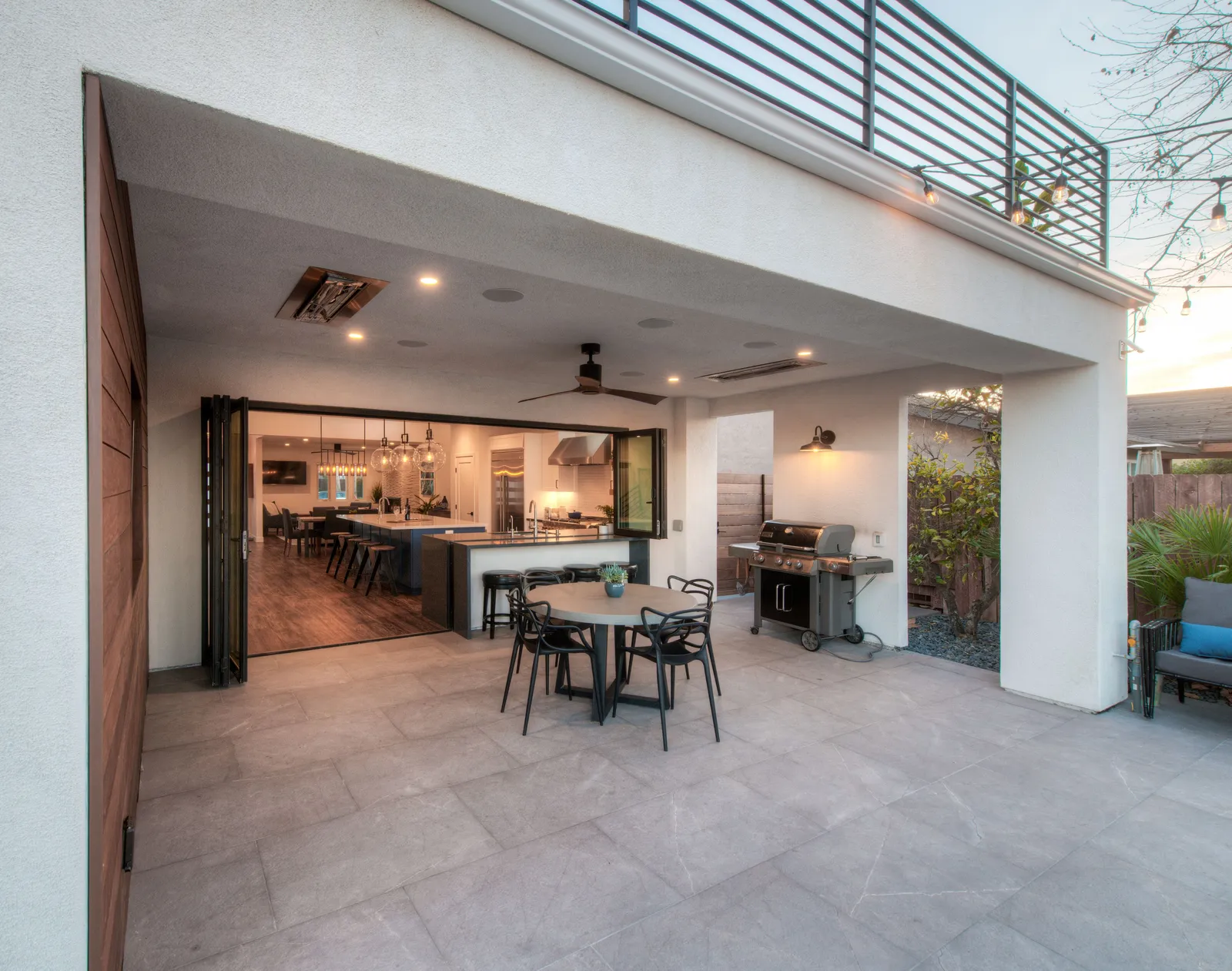
Start with a simple exercise: stand at the pool steps, dripping, and trace where you'd actually walk — to a toilet, to a shower, to a towel, to a snack. That route is your wet path, and everything on it should be chosen to survive water: tile or sealed concrete underfoot rather than hardwood, durable wall finishes, a door that opens from the patio without routing traffic through a carpeted room. This is also where the connection between indoors and out earns its keep. A well-placed patio door — or a wall of folding glass that turns the kitchen's edge into a serving counter — changes how the whole yard gets used, which is exactly the thinking behind our outdoor living work.
The pool bath
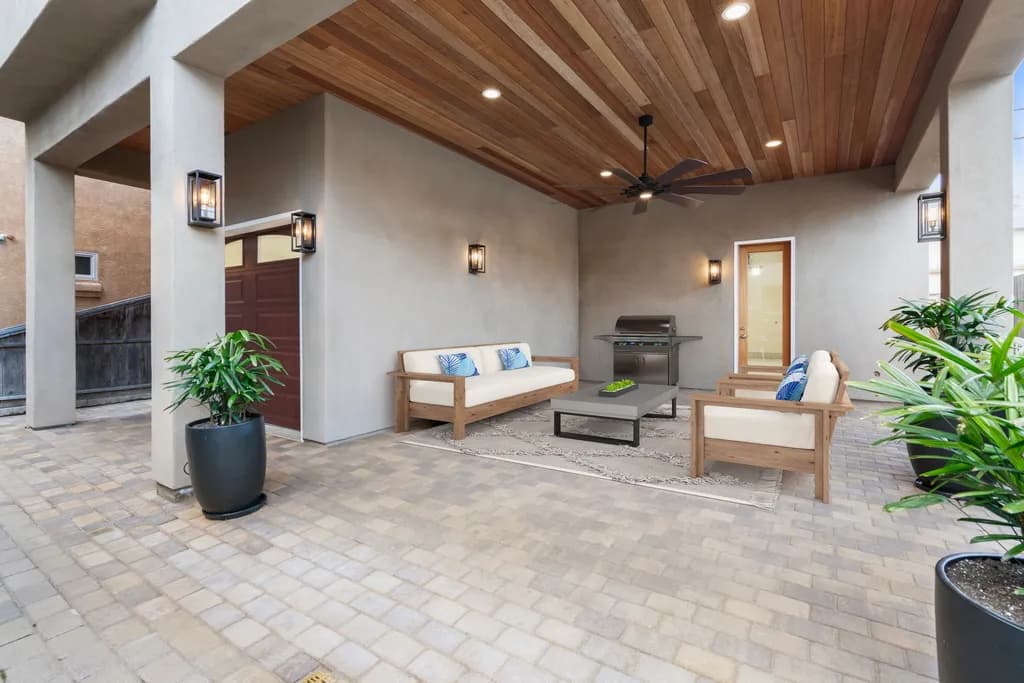
The gold standard is a bathroom you can reach from the yard without crossing the house: a toilet, a shower, and a place to hang a suit. Sometimes that's a new half bath added near the back of the house; often it's an existing bathroom reworked so it opens toward the patio and shrugs off water. The details that make it work are the same ones that make any bathroom remodel last — a curbless, fully tiled shower, a floor drain's worth of humility about where water ends up, and serious ventilation. Wet swimsuits and daily soakings are a stress test; the waterproofing behind the tile matters even more here than in a normal bath, for all the reasons we covered in Why Bathrooms Fail.
Outdoor showers, done properly
An outdoor shower sounds like a luxury and functions like a workhorse: it rinses off chlorine, sunscreen, and sand before any of it reaches your drains or your grout. The difference between a great one and a regretted one comes down to three things. Hot and cold water, not just a garden-hose tee — a warm rinse gets used year-round, a cold one gets used in August. Real drainage, planned with the hardscape so runoff doesn't undermine paving or pool equipment. And privacy that feels intentional: a slatted screen, a low wall, a planted corner. Tucked against the house near the existing plumbing wall, an outdoor shower is a modest add during a larger project and a headache to retrofit alone.
Storage that swallows swim season
Finally, give all that gear somewhere to live. The goal is that a pool day starts and ends outside — nobody comes in for a towel, and nothing wet comes in at all. Worth considering:
- A ventilated towel cabinet or open shelving under the patio cover, so dry towels live where they're used
- Hooks and a bench at the wet path's first stop — kids will actually use hooks at kid height
- A closet or bench box for floats, goggles, and toys, with airflow so things dry instead of mildew
- A dedicated, screened spot for pool equipment and chemicals, locked if children are around
None of this requires a bigger yard. It requires deciding, once, that the pool is part of the house rather than a neighbor to it. If your hallway is currently proving otherwise, request a consultation or give us a call — we'll help your house keep up with your pool before next summer.
Design · Build · Integration
Let's build something beautiful.
Call (619) 334-3322 or request your free design-build consultation.