
Value Engineering: Cutting Cost Without Cutting Corners
"Value engineering" has a reputation problem. To a lot of homeowners it sounds like a polite phrase for cheapening the job — swapping what you wanted for what someone else decided you could live with. Done badly, that's exactly what it is.
Done well, it's something else entirely: a disciplined pass through the design that asks, of every line item, "is this dollar doing work you'll notice?" This summer, with material costs still unsettled and some products quoting long lead times, it's the most useful conversation in our design meetings. Here's how it should work.
Spend where your hands go
The reliable rule: protect the things you touch and see every day, and economize on the things you don't. Cabinet drawer hardware, faucets, the countertop edge you lean against, the flooring underfoot — these earn their cost hourly. The plumbing rough-in behind the wall, the framing lumber, the exact brand of drywall? You need them done right, but "right" doesn't have a luxury tier. Good value engineering moves money from the invisible column to the daily-use column, not from quality to junk.
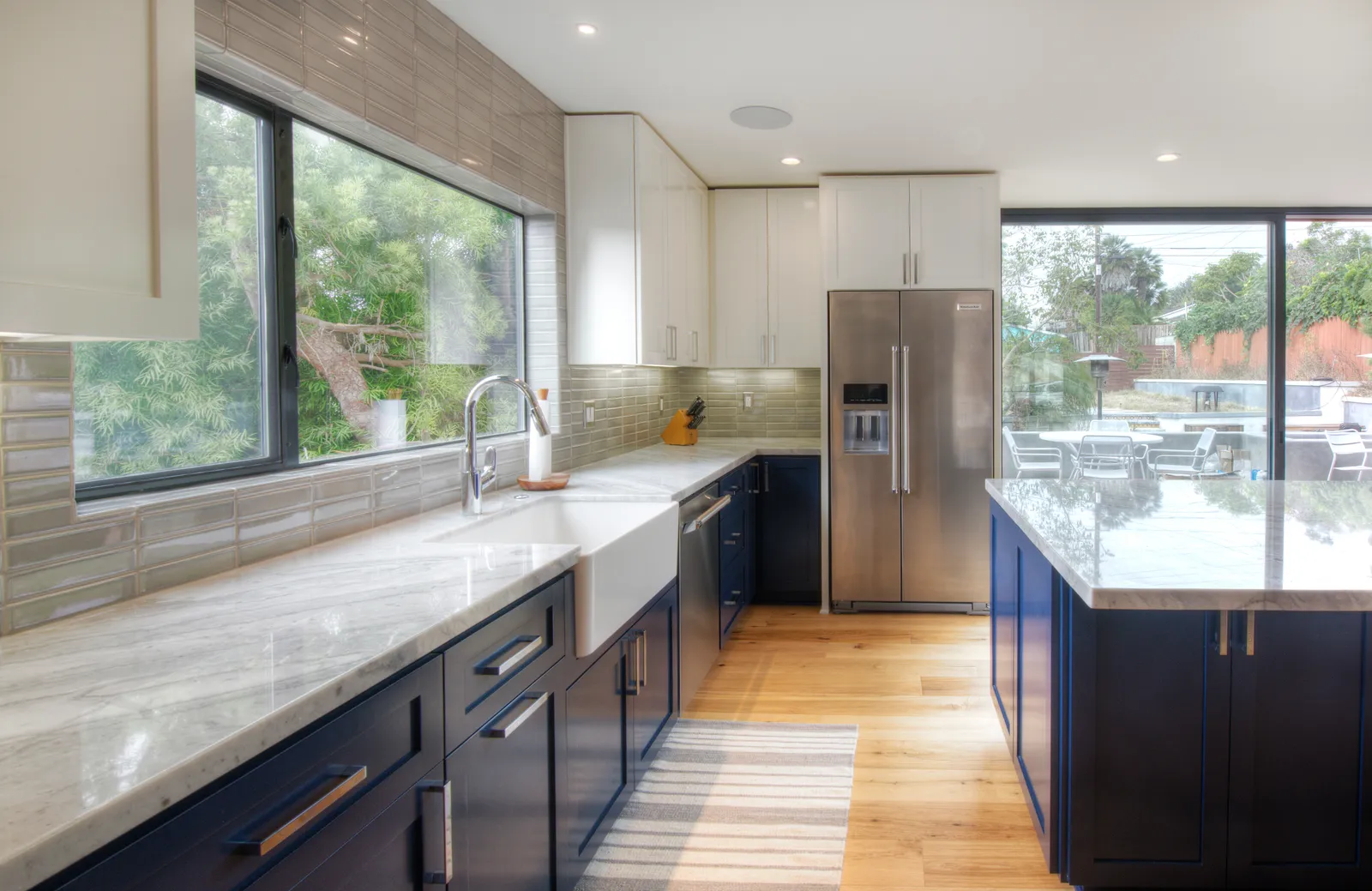
A concrete example from a recent kitchen reconfiguration in Encinitas: full-height custom cabinetry on the wall everyone sees, well-made stock cabinets inside the pantry where nobody will ever admire the door profile. Same function, meaningful savings, zero regret.
The layout is the biggest line item
The most powerful value engineering happens before any finish is selected: it's in the floor plan. Keeping plumbing where it is instead of walking it across the house. Working within the existing roofline instead of raising it. Achieving the open feel with one beam instead of three. These decisions move project cost by multiples of what any tile swap can, which is why they have to happen during design — a builder who only prices what's drawn can't offer them. That's the core argument for design-build, and for a process where the people pricing the work sit at the design table.
Where we won't cut, ever
- Waterproofing — showers, decks, windows. Failures here cost more than the whole savings list combined.
- Structure and foundations. There is no "value" grade of holding the house up.
- Anything behind tile or under slab. Access is the expense; do it once.
- Permits and inspections. Skipping them isn't savings, it's deferred cost with interest.
If a bid gets cheap by touching this list, it isn't value engineering — it's the trap we described in Why the Cheapest Bid Is Rarely the Cheapest Remodel.
Ask for the second version
Here's a practical habit: when your design is priced, ask your builder for a value-engineered alternate — same design intent, trimmed cost, with every substitution listed. Reading the two side by side teaches you what your money is actually buying, and it puts you in charge of the trade-offs instead of discovering them mid-project. Sometimes clients take the whole list; more often they take half and consciously keep the splurges that matter to them. Either way, the decision was theirs.
That's the real point. Value engineering done honestly doesn't shrink your project — it aims it. If your wish list and your budget aren't quite shaking hands yet, start the conversation or give us a call — we'll show you where the smart money goes.
Design · Build · Integration
Let's build something beautiful.
Call (619) 334-3322 or request your free design-build consultation.