
Walk-In Showers vs. Tub-Shower Combos
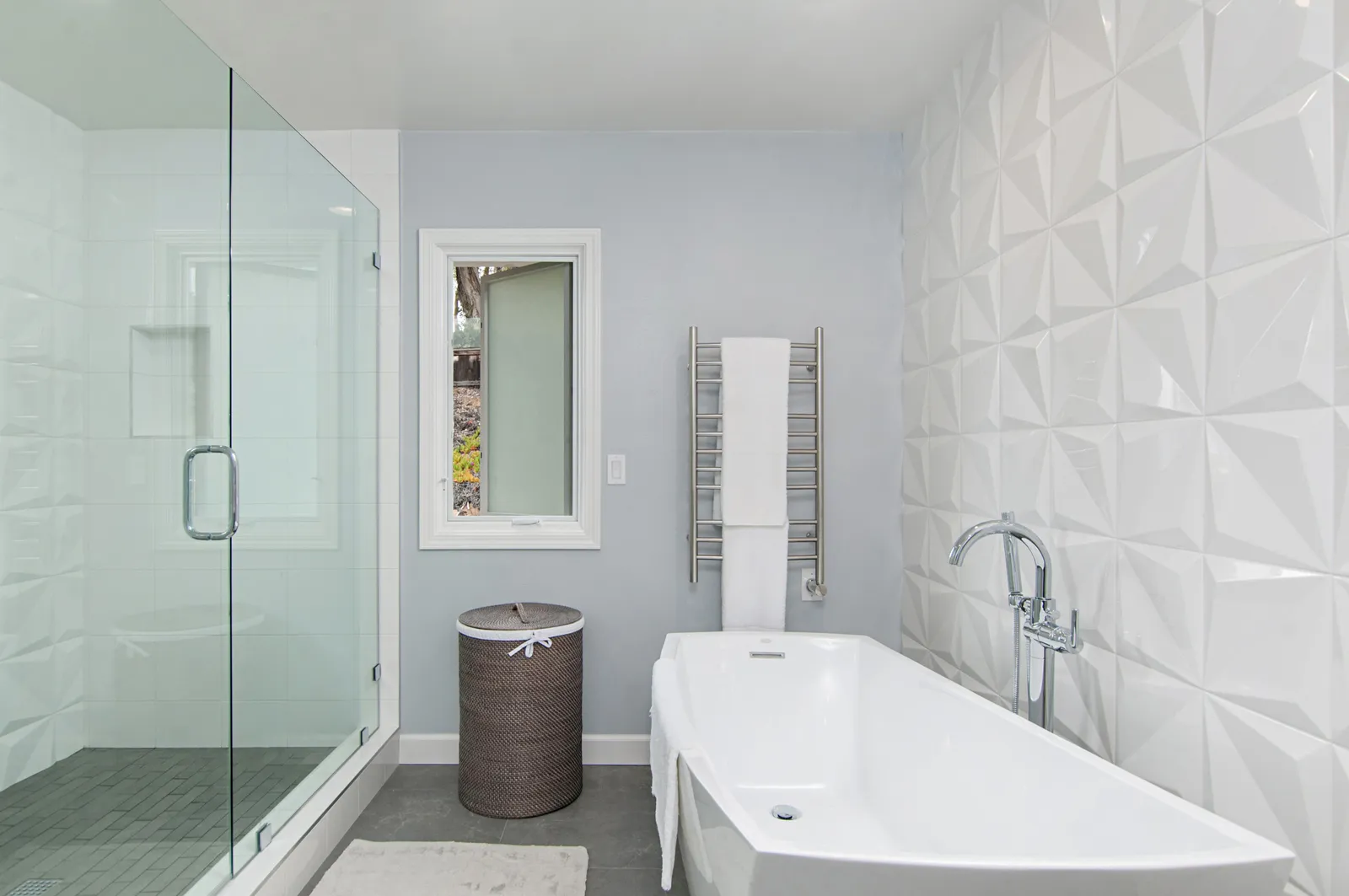
It's one of the first questions in almost every bathroom design meeting, and it stalls more decisions than tile ever will: do we keep the tub? Somewhere in the back of every homeowner's mind is a voice — usually quoting a real estate agent from a decade ago — insisting that removing a bathtub tanks your resale value.
The real answer is more useful than the folklore. Here's how we walk clients through it.
What the walk-in shower actually buys you
Pull a tub-shower combo out of a standard five-foot alcove and you gain a surprising amount of room. A walk-in shower in that same footprint feels dramatically larger: a full glass panel instead of a curtain, a bench, a niche that holds more than two bottles, and no fiberglass ledge to climb over. In the compact bathrooms common to San Diego's older housing stock — the midcentury ranches of Clairemont and Allied Gardens come to mind — that swap is often the single biggest space move available, right up there with the ideas in our post on small-bathroom design that works.
There's a longevity argument too. A curbless or low-curb shower with a bench and a handheld sprayer is the kind of detail that lets a house work at every age. Plenty of clients in their forties ask for it now, not because they need it, but because they plan to stay in the house long enough to be glad they did.
When the tub earns its keep
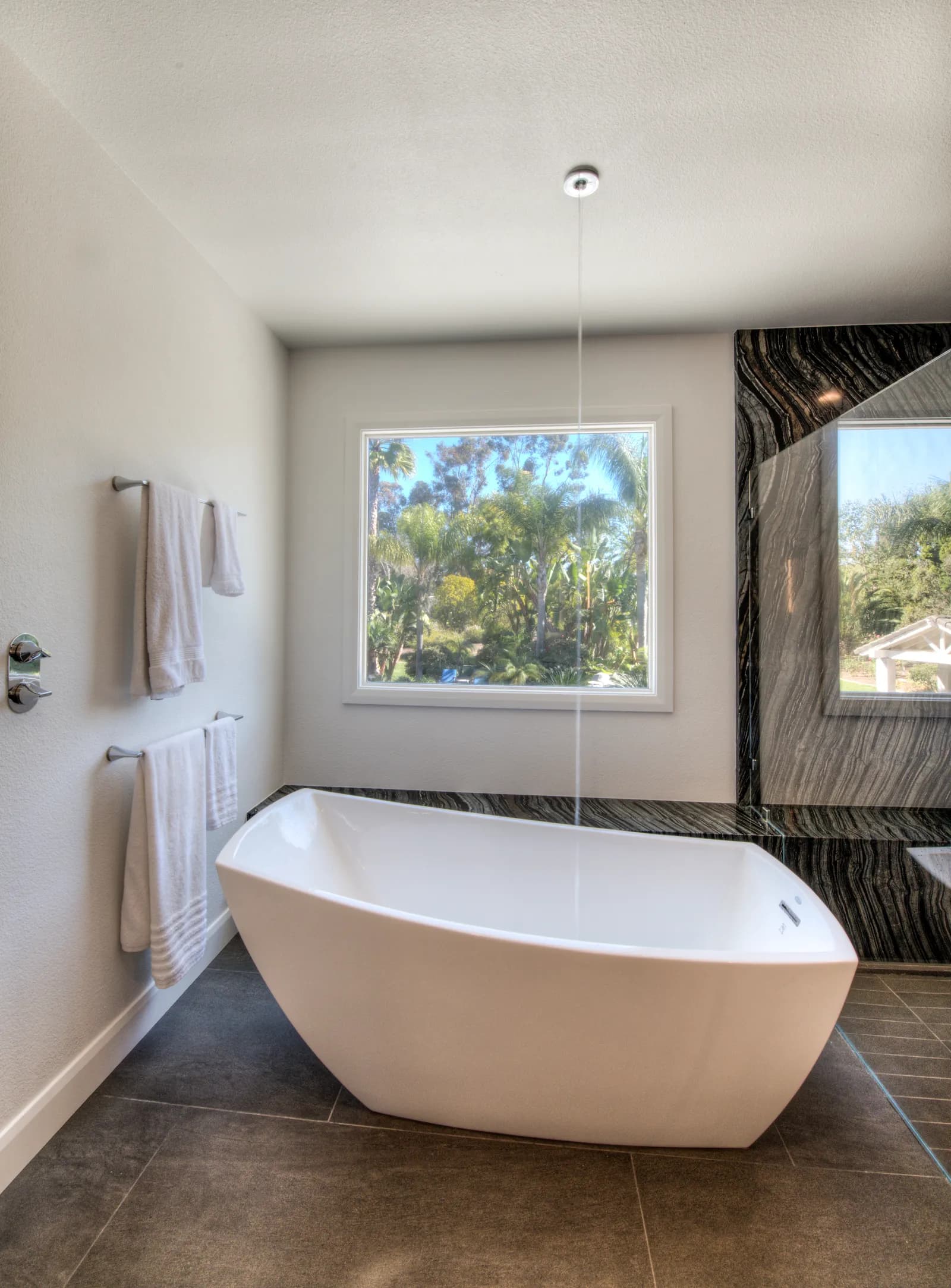
The old rule still has a core of truth: a home should usually keep at least one tub somewhere. Families with young children genuinely use it, and future buyers with young children will look for it. But note the wording — one tub in the house, not one in every bathroom.
So the question is rarely "tub or no tub." It's "which bathroom gets the tub?" A common pattern in our bathroom remodels: the hall bath keeps a well-built tub-shower combo for the kids and guests, while the primary bath trades its rarely used tub for a generous walk-in shower. And if you love a long soak, that's not a reason to keep a cramped combo — it's a reason to consider a freestanding tub and a separate shower, where the floor plan allows.
The construction details that separate good from gorgeous
Whichever way you go, the difference between a shower that looks good at the walkthrough and one that's still perfect in fifteen years happens behind the tile:
- Proper waterproofing membranes and pre-slope, not just cement board
- A drain and valve layout planned before drywall, not after
- Ventilation sized for our damp marine-layer mornings, so the fan actually clears the mirror
None of this photographs well, which is exactly why it gets skipped by builders in a hurry. It's also where a design-build team earns its fee — the designer and the tile setter are answering to the same standard.
How to decide
Ask three questions. When did anyone last take a bath in this room? Is there — or could there be — a tub elsewhere in the house? And who needs to use this bathroom in ten years? Answer those honestly and the decision usually makes itself.
If you're still torn, that's what a design meeting is for. Request a consultation or give us a call — we'll help you settle the tub question and design a bathroom you'll never want to leave.
Design · Build · Integration
Let's build something beautiful.
Call (619) 334-3322 or request your free design-build consultation.