
Why Your Remodel Needs a Single Point of Accountability
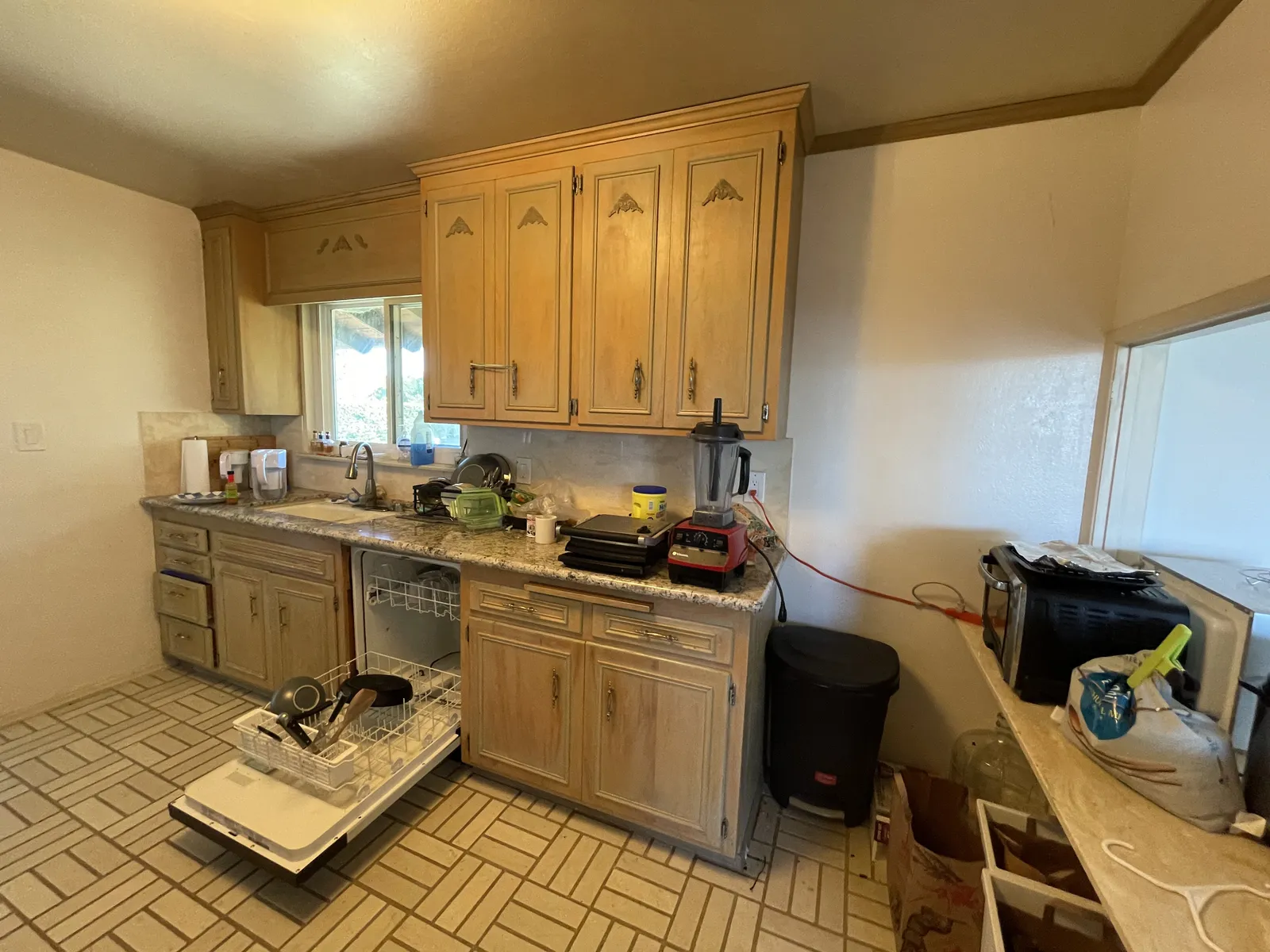
Here's a story we hear a few times a year, always from someone who's already lived it. The designer drew a beautiful kitchen. The contractor bid it and started building. Then the range hood didn't fit the ceiling height, the pantry wall turned out to be structural, and the tile the designer specified was on a fourteen-week backorder. Now the homeowner is on the phone, and everyone on the other end is pointing at someone else.
Nobody in that story is a villain. The designer designed, the builder built, the supplier supplied. The problem is structural: when responsibility is split, the gaps between the parties belong to no one — except you.
The gaps are where remodels go wrong
Remodels rarely fail at the center of anyone's job. Framers frame well; tile setters set tile well. Projects fail at the handoffs — the places where design assumptions meet field conditions, where a selection's lead time meets a construction schedule, where a change in one trade's work ripples into three others. In a traditional arrangement, every one of those handoffs crosses a company boundary. Each crossing is a chance for information to drop, and every dropped detail eventually becomes a delay, a change order, or a compromise you didn't choose.
We wrote about who does what on a remodel — architect, designer, builder — and all those roles still exist under one roof. What changes is who owns the seams between them.
What single accountability actually looks like
When one firm carries a project from first sketch through final walkthrough — the design-build model — a few practical things happen:
- Designs get priced as they're drawn, so you never fall in love with a plan the budget can't survive.
- Field questions go to people who sat in the design meetings, so answers come back in hours, not weeks of email triangles.
- Lead times shape the schedule from day one, because the people ordering the tile are the people installing it.
- When something goes wrong, one phone number rings. No investigating whose scope the problem falls into — it's ours either way.
That last point is the whole argument in miniature. Accountability isn't about blame; it's about who is obligated to solve the problem regardless of whose corner it started in.
What it feels like from the homeowner's side
The practical difference shows up in your week, not just the project's outcome. Instead of forwarding emails between a designer and a contractor and hoping the thread doesn't die, you get one meeting where the person who drew the plan and the person building it are the same team, working from the same numbers. Decisions come to you framed with their cost and schedule consequences already attached — "here are your two options, here's what each does to the timeline" — so you spend your energy choosing, not chasing. Most clients tell us that's the part they'd never give back.
The question to ask anyone you're vetting
You don't have to hire us for this advice to be useful. Whoever you're interviewing this winter, ask one question: "When the drawings and the field conditions disagree, who resolves it, and who pays for the resolution?" A confident, specific answer — in writing — is worth more than any portfolio photo. A vague one tells you exactly whose problem those gaps will become.
For our part, the answer is simple: we designed it, we're building it, and our promise is that the seams are our responsibility, start to finish. If you'd rather spend your remodel making choices than making referee calls, request a consultation or give us a call — one conversation, one team, one number to call.
Design · Build · Integration
Let's build something beautiful.
Call (619) 334-3322 or request your free design-build consultation.