
Wide-Plank Floors: What to Know Before You Fall in Love
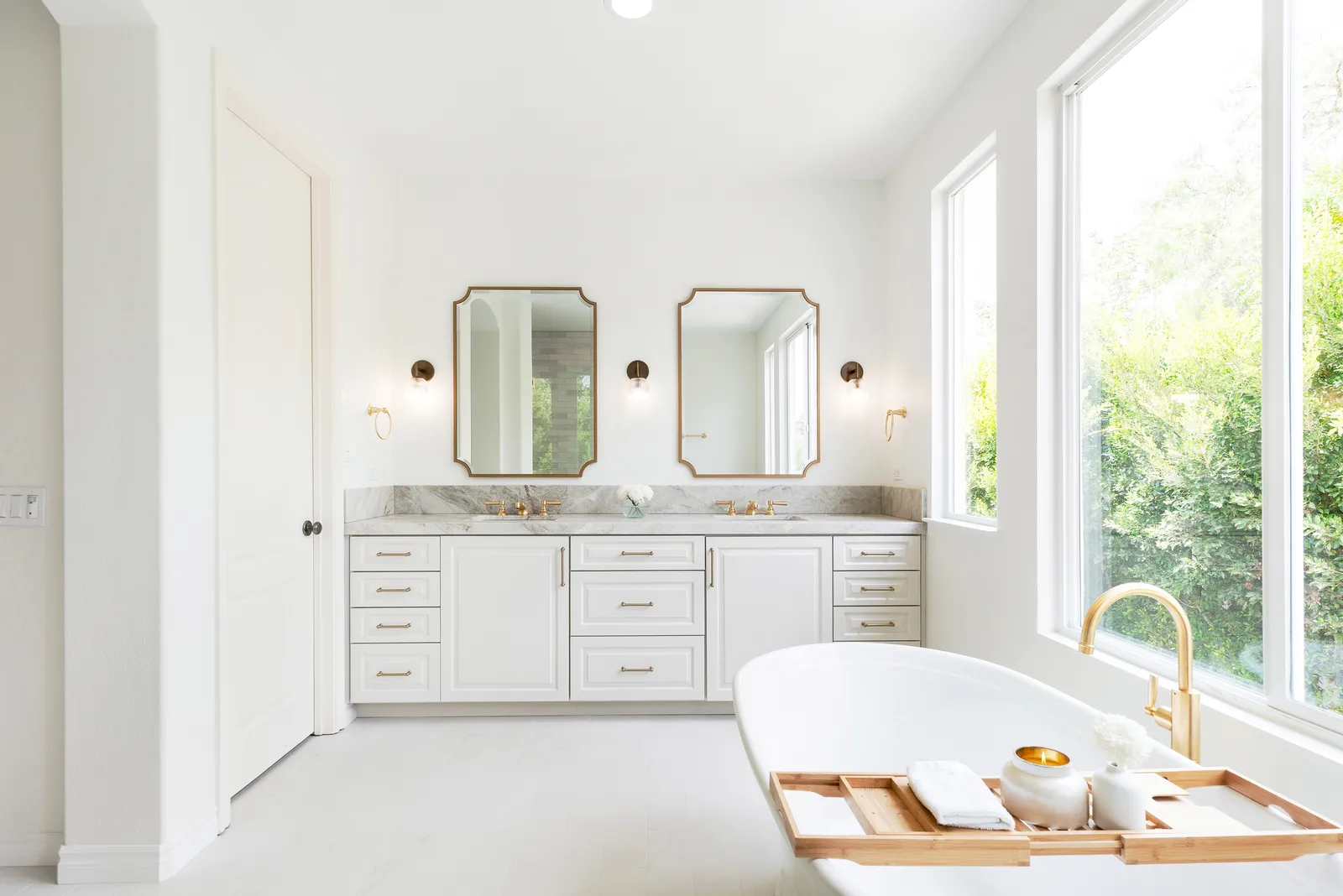
Somewhere in the middle of every design meeting, a flooring sample lands on the table and the room goes quiet. It's almost always a wide plank — seven, eight, sometimes ten inches across — in a soft matte finish that makes the whole board read like furniture. Wide plank has that effect. Fewer seams, longer sightlines, more of the actual wood on display. In an open floor plan it makes a house feel calm in a way that narrow strip flooring simply can't.
We love it too. But wood this wide asks more of your house than the three-inch oak strips in a 1960s Clairemont ranch ever did, and the time to learn its habits is before you've fallen for a sample, not after it's installed.
Wider boards move more
Wood swells and shrinks with humidity, and the wider the board, the more total movement each one carries. San Diego is gentler on wood than most places — no snowy winters, no humid summers — but we're not static. The marine layer keeps coastal homes damp through spring, and then a Santa Ana rolls in like the ones we get this time of year, drops the humidity to single digits for three days, and every plank in the house exhales at once. Small seasonal gaps between wide boards are normal. What you're trying to avoid is cupping, and that's mostly a question of what's under the floor and how the wood was handled before it went down.
Engineered vs. solid: the honest comparison
For wide widths, engineered planks — a real hardwood wear layer over a cross-laminated core — are usually the more stable choice, especially within a mile or two of the water. Solid wide plank can absolutely work inland, but it wants acclimation time in the house before installation and a bit more tolerance for seasonal character. A few questions worth settling with your designer:
- How thick is the wear layer? A generous one can be refinished later, which matters if you're flooring a whole house you plan to keep.
- What's the subfloor condition? Wide plank telegraphs every hump and dip. Older homes often need flattening first — one more reason good remodelers open things up before promising numbers.
- Matte or gloss? Low-sheen finishes hide the small stuff. Glossy wide planks show everything, twice.
Where wood shouldn't go — and what to use instead
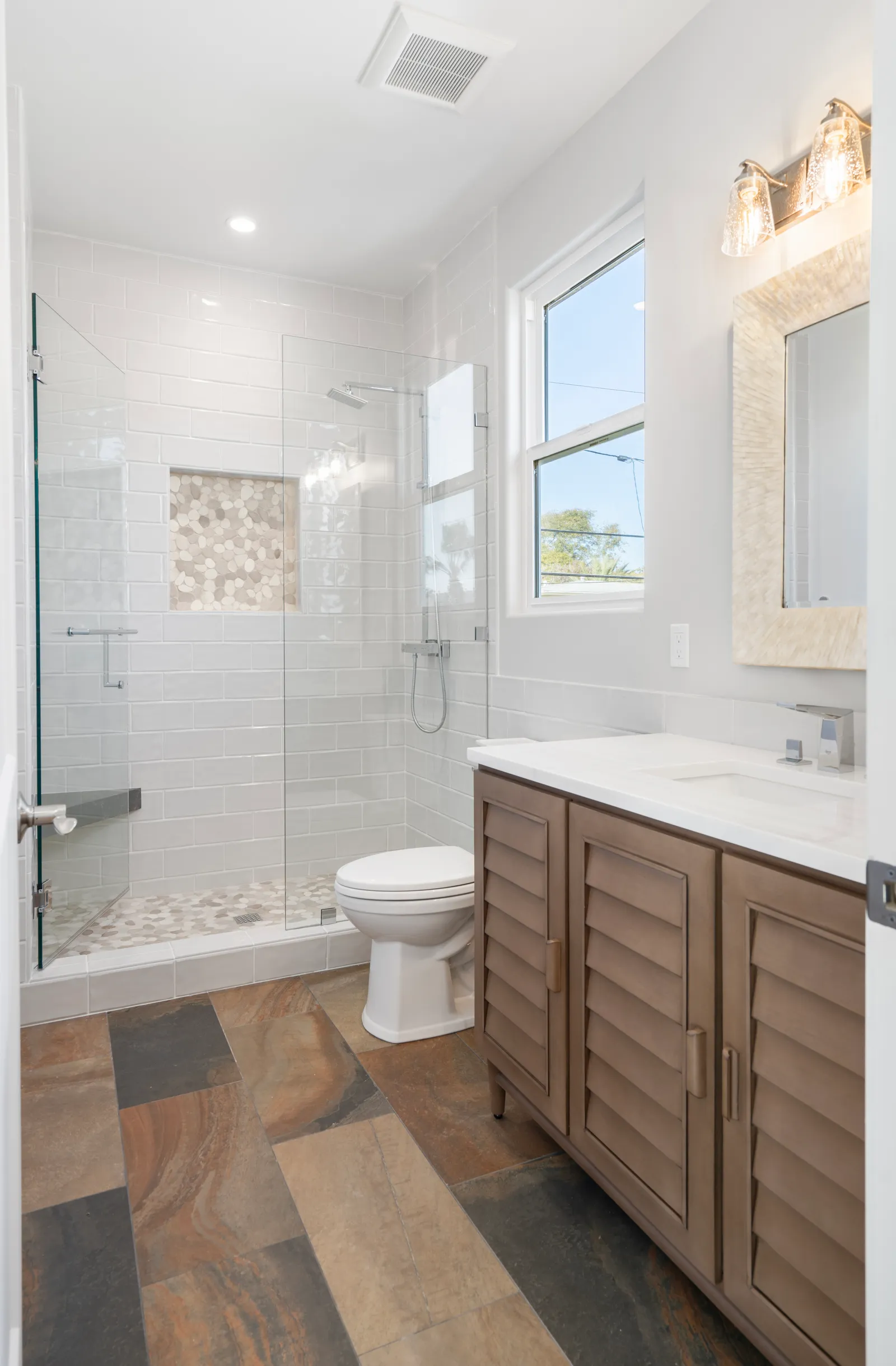
Bathrooms and laundry rooms are hard on real wood no matter how careful you are. The good news is that wood-look porcelain tile has gotten remarkably convincing in long plank formats, so a bathroom remodel can carry the same warm, linear look right through the wet zones without a seam of worry. Run the tile planks in the same direction as the adjacent hardwood and most guests will never clock the transition.
Choosing a floor you'll still love in fifteen years
Wide plank itself isn't a fad — it's how old California houses were floored before narrow strips became the economical default. What dates a floor is the finish: heavy hand-scraping, gray-washed stains, dramatic two-tone character grades. If you're weighing where to be adventurous and where to play it safe, our post on trends versus timeless choices applies to nothing more than flooring, because nothing is more expensive to un-choose. A medium-width plank in a natural or lightly warmed tone is the floor that survives three rounds of furniture and two repaintings.
Flooring decisions ripple through a whole-home remodel — they set ceiling heights at doorways, transitions, even cabinet reveals — so it's a choice worth making early and making once. Thinking about new floors, or a bigger project they'd be part of? Request a consultation or give us a call — we'll help you pick a plank your house can actually live with.
Design · Build · Integration
Let's build something beautiful.
Call (619) 334-3322 or request your free design-build consultation.