
Choosing Interior Paint: Sheens, Whites, and Test Patches
Paint looks like the easiest decision in a remodel. It's the cheapest material in the house, it's reversible, and everyone has opinions about color. Then you're standing in front of a wall of nearly identical white chips, and it stops feeling easy.
San Diego makes it trickier than most places. Our light swings hard through the day — a flat gray marine layer in the morning, sharp bright sun by mid-afternoon, warm reflected light off canyon slopes and stucco in the evening. A white that looks crisp at noon can go dingy at 9 AM in July. Here's how we walk clients through it.
Sheen first: the decision under the decision
Before color, settle sheen — it changes how the same color reads and how the wall lives.
- Flat and matte hide surface imperfections beautifully and give color a soft, velvety depth. Best for ceilings and low-traffic walls; historically harder to scrub, though modern matte formulas have improved.
- Eggshell is the workhorse for most walls: a whisper of sheen, wipeable, forgiving.
- Satin stands up to fingerprints and moisture — good for kids' rooms, hallways, and bathrooms.
- Semi-gloss belongs on trim, doors, and cabinetry, where its durability and slight shine draw a crisp line around the room.
One caveat: the shinier the paint, the more it telegraphs every wave and patch in the drywall. If you're going satin or glossier on a large wall, the prep work underneath matters as much as the paint.
Why "white" is a hundred decisions
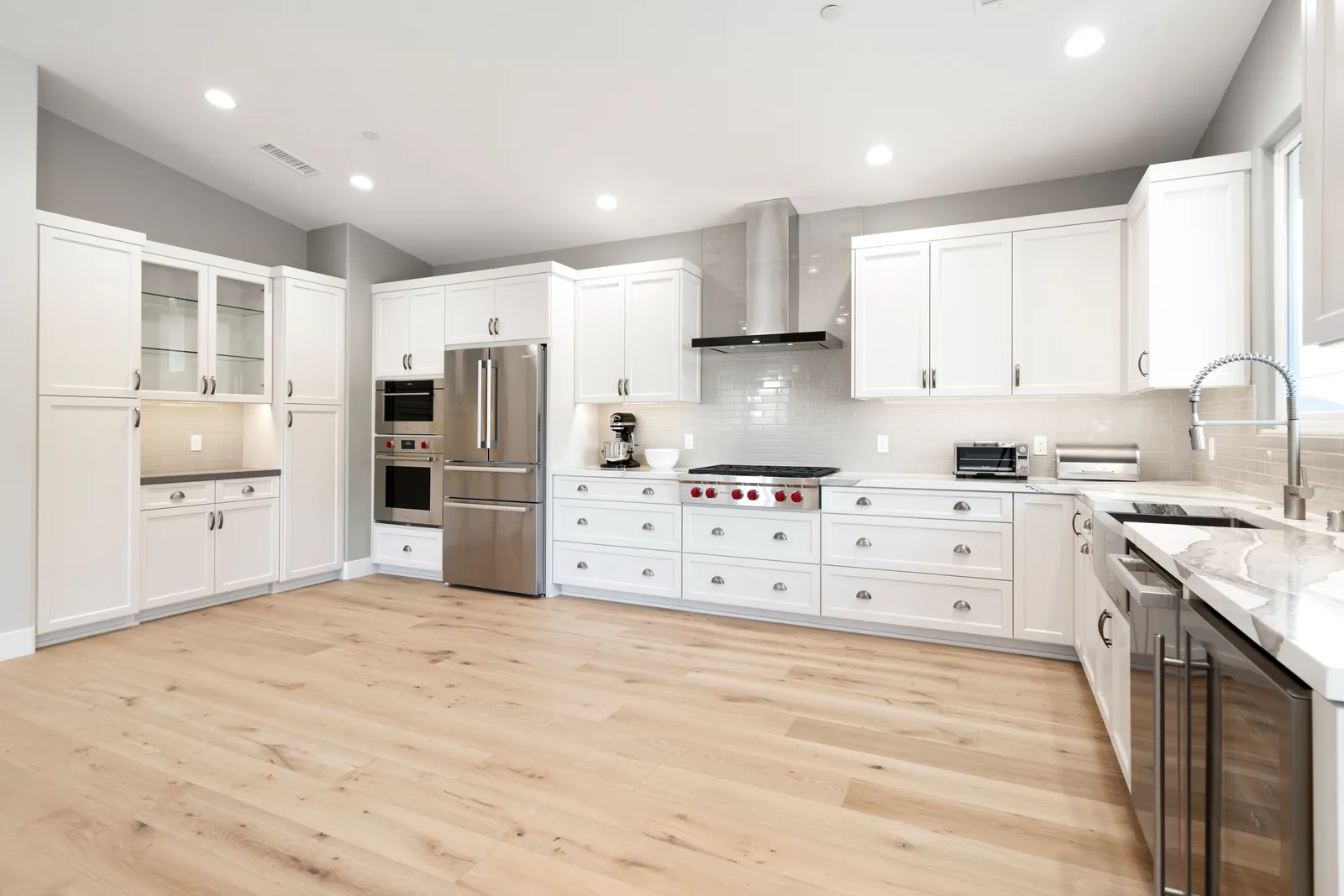
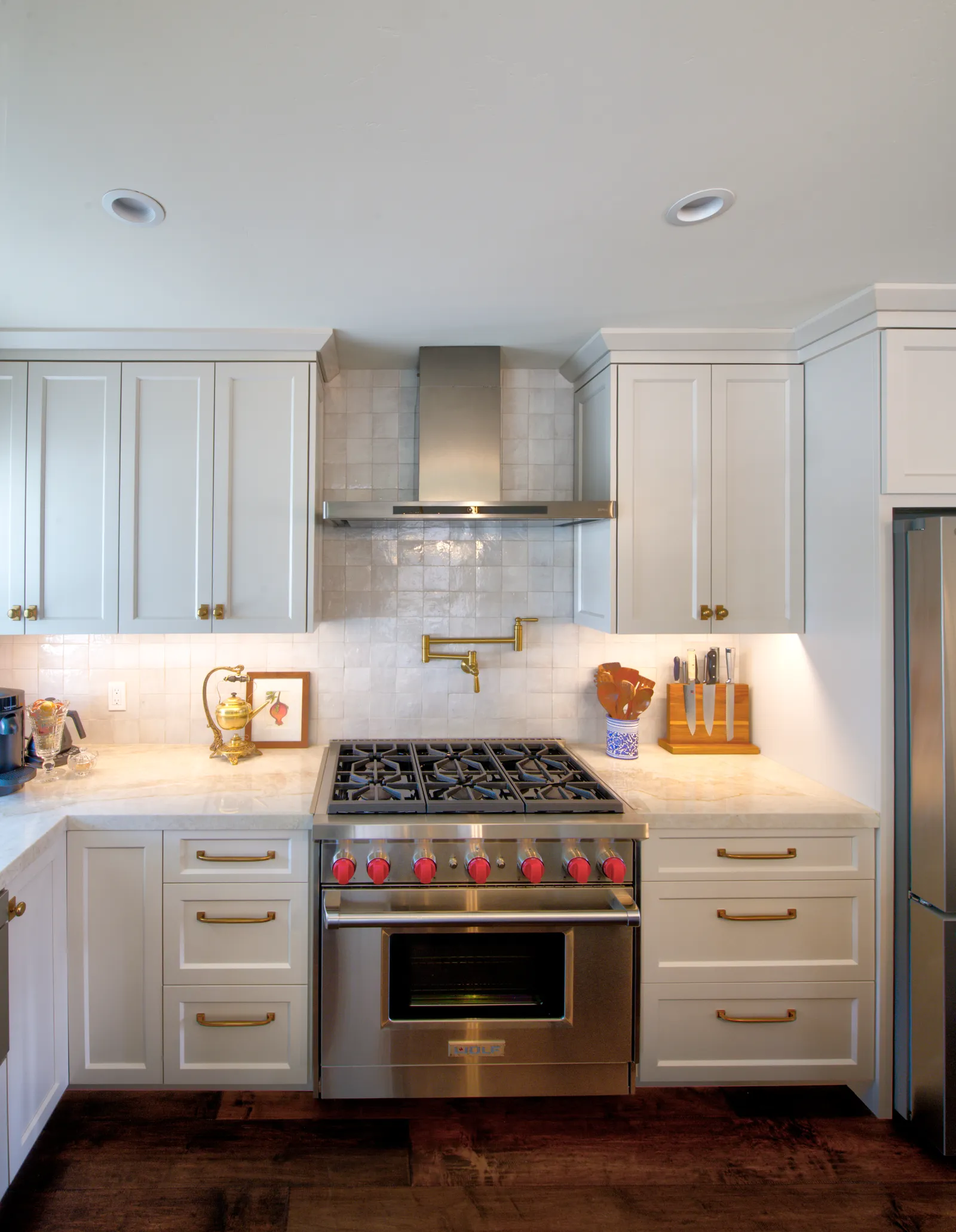
Every white leans somewhere — yellow, red, green, blue, gray. That undertone is invisible on the chip and unmissable on the wall, especially next to fixed elements. A cool blue-white beside warm oak floors can make the wood look orange. A creamy white against a bright marble-look counter can read yellowed. In kitchens, the wall color, the cabinet color, and the tile need to be chosen as a family — it's the same logic we described when talking through backsplash choices. North-facing rooms pull whites cooler and grayer; south- and west-facing rooms warm everything up. There is no "best white," only the best white for that room's light and neighbors.
Test patches: trust the wall, not the chip
The only reliable referee is the wall itself. Buy sample quantities of your two or three finalists and paint big swatches — two feet square, two coats, on at least two different walls of the room. Then live with them: look under the morning marine layer, at high noon, and by lamplight after dinner. Artificial light matters as much as daylight here — a warm bulb and a cool bulb will split the vote on the same swatch, which is one more reason a whole-home lighting plan should be settled alongside your palette, not after it. Give the patches a week. The winner usually becomes obvious.
Where paint lands in a remodel
In construction sequence, paint comes late — after drywall, after cabinets are set, often woven around flooring. But in design sequence, it should be chosen early, because wall color influences counters, tile, and cabinet finishes far more than people expect. On our projects, paint is locked in during selections, long before anyone opens a can.
For a deeper look, see Engineered vs. Solid Hardwood Floors.
Repainting is also the moment to fix what's under the paint: cracked texture, dated finishes, walls that have been patched one too many times. Start the conversation or give us a call — we'll help you build a palette that flatters your house in every light San Diego throws at it.
Design · Build · Integration
Let's build something beautiful.
Call (619) 334-3322 or request your free design-build consultation.