
Porcelain Slab Counters: The New Contender
For the past decade, the countertop conversation in most design meetings has been a two-horse race: quartz for practicality, natural stone for romance. Lately a third contender keeps joining the shortlist — large-format porcelain slabs, a material Europe has used for years that's now showing up in San Diego fabrication shops in force.
Porcelain isn't a novelty tile grown up. Done right, it's a legitimately different countertop material with a few tricks nothing else can match — and a few honest limitations you should hear before you fall for a showroom sample.
What a porcelain slab actually is
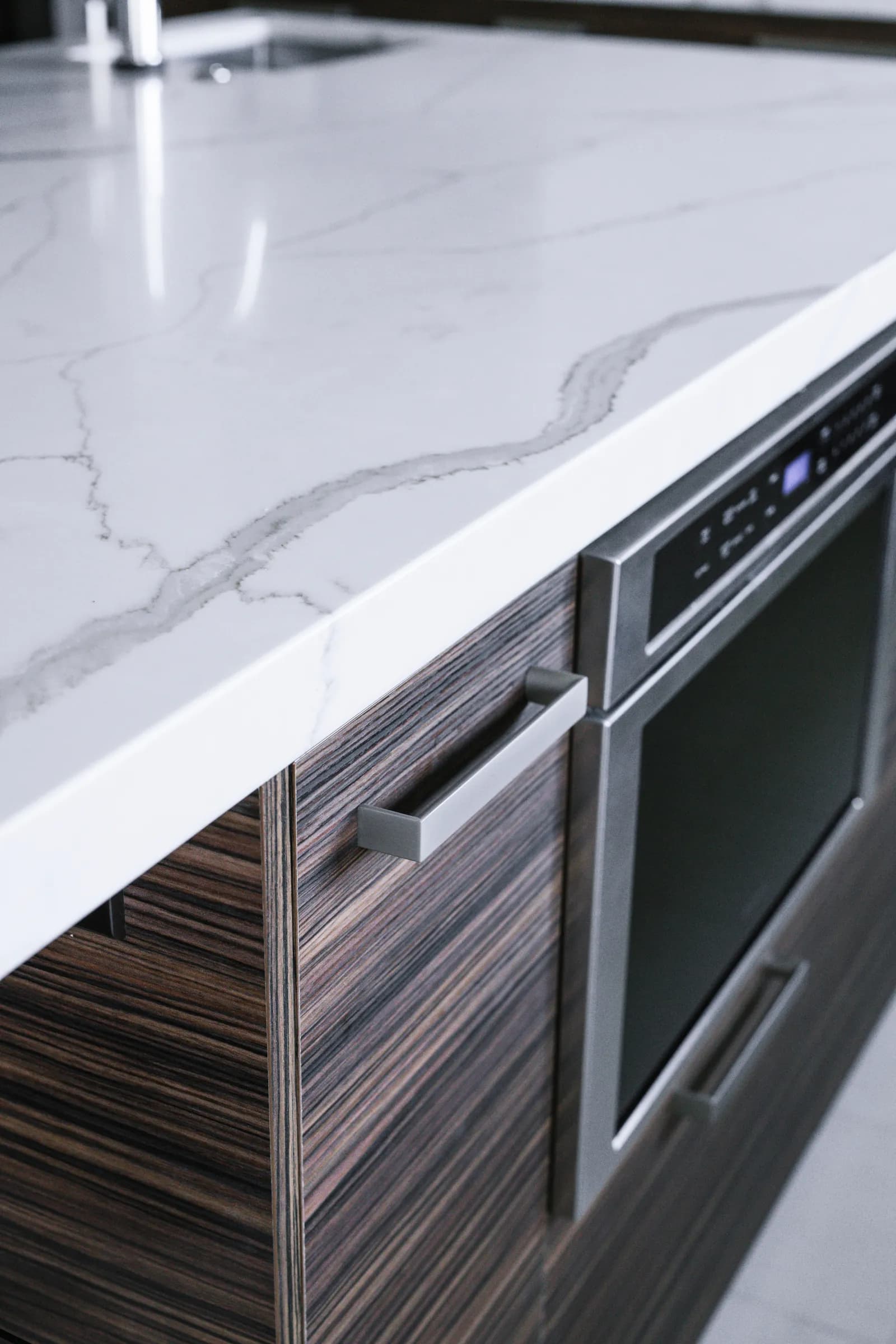
Think of it as an extremely dense ceramic, fired at high temperature and pressed into huge, thin sheets — big enough to run a full island top or clad a wall without seams. The surface pattern, often a convincing marble or concrete look, is printed and fired into the face. That manufacturing method is the source of both its superpowers and its main caveat, which we'll get to.
Where it genuinely shines
- Heat. A hot pan straight off the burner won't scorch it — a real advantage over quartz, whose resin binders dislike high heat.
- Sun. Porcelain is UV-stable, which makes it one of the only slab materials we'll happily spec for an outdoor kitchen. San Diego sunshine fades quartz and stresses some stones; porcelain shrugs it off through summer glare and Santa Ana heat alike.
- Stains and scratches. The fired surface is nonporous and hard. Wine, citrus, and coffee wipe away; no sealing, ever.
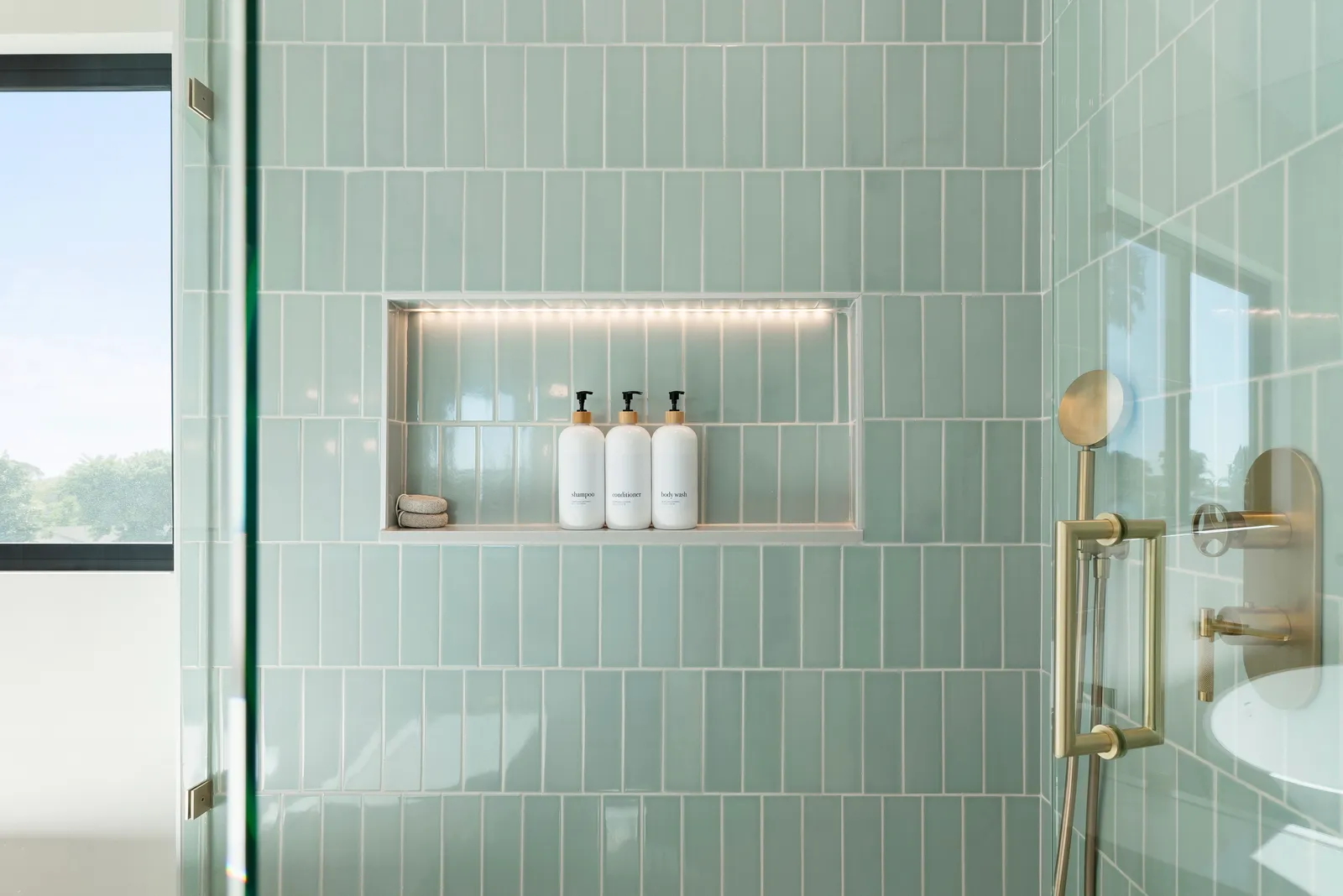
- Beyond the counter. Because slabs are thin and enormous, they work as shower surrounds, fireplace faces, and full-height backsplashes. For the grout-free look driving the wet room conversation we covered last month, a seamless porcelain wall is a beautiful answer, and it's earning a spot in more of our bathroom projects for exactly that reason.
The honest caveats
The printed pattern generally lives on the face of the slab, so an exposed edge can reveal the material's plain body — good fabricators handle this with mitered edges or careful edge treatments, but it's a detail to design deliberately, not discover later. The edges themselves are also the vulnerable spot: porcelain resists scratches across its face yet can chip on a corner if you strike it hard with something heavy.
And more than most materials, porcelain rewards experience. Cutting and handling big, thin slabs is a specialized skill; an installer who mostly does granite may not be the right hands for it. This is a case where who fabricates matters as much as what you pick.
Should it be on your shortlist?
If your project involves serious sun, serious heat, or big uninterrupted surfaces, yes — porcelain has earned the look. If your heart is set on the depth of true natural stone, or your budget wants the simplest well-traveled path, quartz and granite remain excellent answers. Materials are running longer-than-usual lead times across the board this year, so whichever way you lean, deciding early keeps your schedule honest.
More on this in EV Charging: Wiring Your Garage for the Future.
The best way to choose is side by side, with real slabs and your actual layout on the table. Request a consultation or give us a call — we'll help you weigh the contenders for the way your household really cooks, bathes, and entertains.
Design · Build · Integration
Let's build something beautiful.
Call (619) 334-3322 or request your free design-build consultation.