
Range Hoods: Function First, Then Beauty
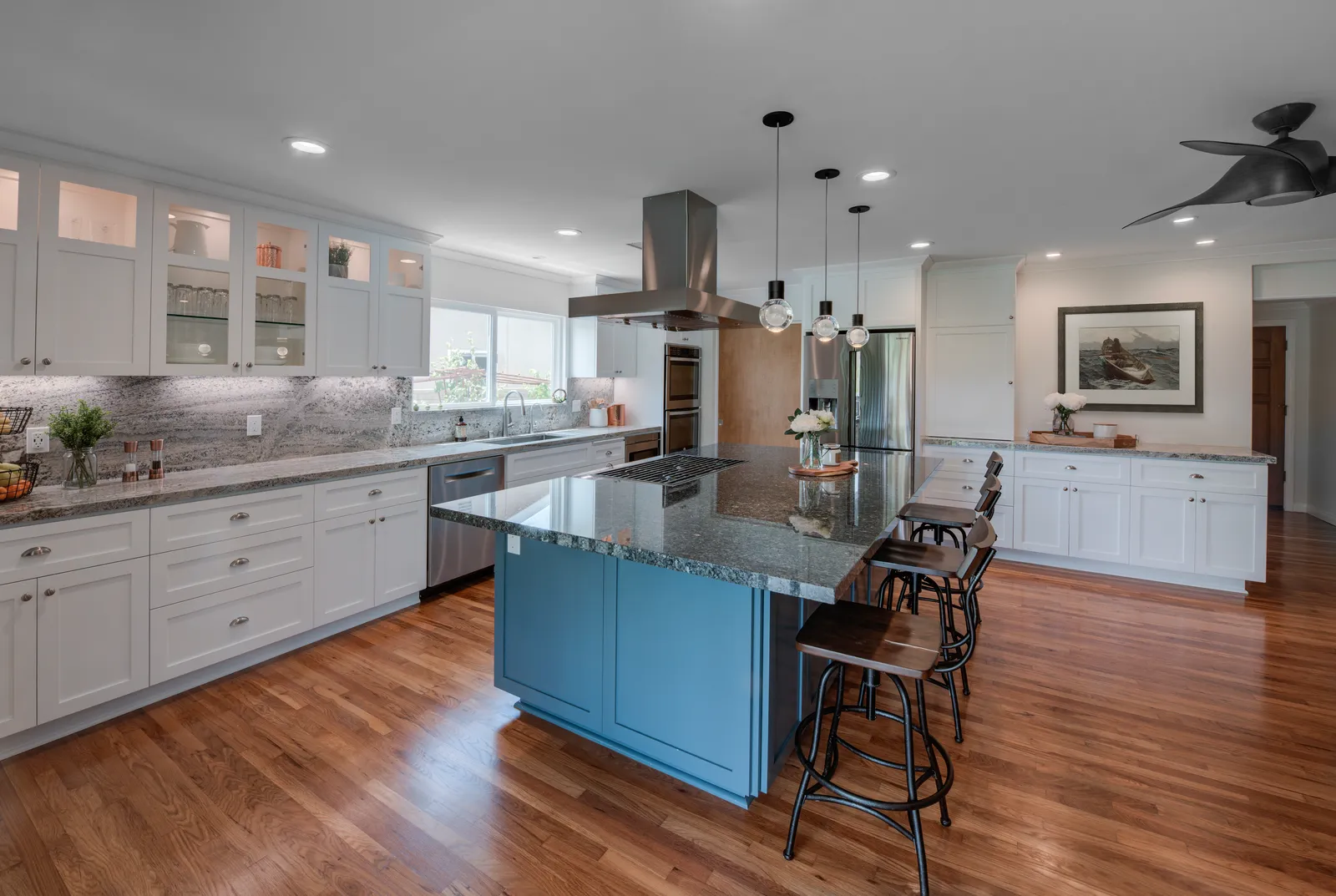
It's the second week of January, which means a lot of San Diego kitchens are getting a workout — new cookbooks, resolution dinners, and windows that stay closed on the cool nights. And in open-plan houses, that's exactly when homeowners notice the thing they never think about during a remodel: last night's salmon is still in the living room this morning.
The range hood is the least glamorous decision in a kitchen and one of the most consequential. Here's how to get it right — function first, then beauty.
Ducted, always, if you possibly can
There are two kinds of hoods: ducted units that move air outside, and recirculating units that pass it through a filter and blow it back at you. A recirculating hood catches some grease; it does very little about steam, heat, or smell. If there's any reasonable path to the exterior — through a wall, up through the roof, across an attic — take it. In a kitchen remodel the walls are already open, which makes it the cheapest ducting you'll ever buy. Smooth, short, wide duct runs matter too: every elbow and every foot of skinny flex duct steals performance the spec sheet promised.
Size the airflow to the cooking, not the catalog
Hood power is measured in cubic feet per minute, and the right number depends on how you cook. A gentle electric cooktop needs far less than a high-output gas range that sears and stir-fries. Two rules of thumb serve most kitchens well: the hood should be at least as wide as the cooking surface below it (a little wider is better, especially over an island), and more capture area beats more fan speed. A deep hood running on low is quieter and more effective than a shallow one screaming on high.
Quiet matters more than people expect. In a great room, a loud hood simply doesn't get turned on — we've watched it happen. Check the sound rating at the speed you'll actually use, not the maximum.
The open-plan problem (and the makeup-air footnote)
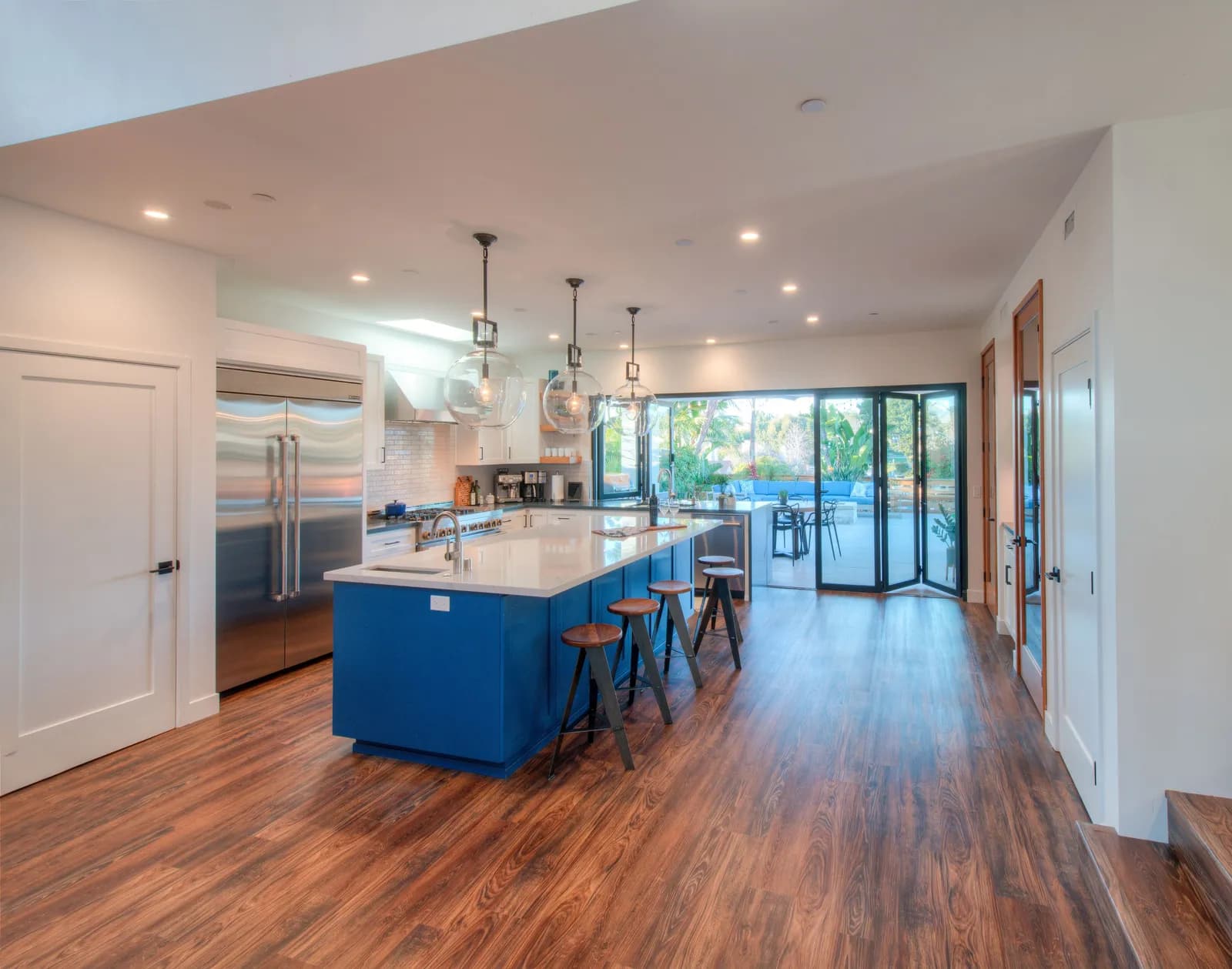
Open layouts are wonderful — we've written about why great rooms took over — but they turn the kitchen's air into the whole house's air. There's no door to close on a smoky pan. That's why open-plan homes need better ventilation than closed kitchens, not the same. And once hoods get powerful enough, code requires makeup air — a path for fresh air to replace what the hood exhausts, so the fan isn't fighting a sealed house. It's a detail your design-build team should handle in planning, not discover at inspection.
Now the beautiful part
Once the airflow works, the hood can be almost anything: a plastered chimney that disappears into the wall, a wood surround that matches the cabinetry, a sculptural metal statement, or a low-profile insert tucked into a custom mantel. The hood usually sits at eye level in the room's most-photographed sightline, so let it carry the design — and let its finish anchor the metals story you're telling everywhere else.
Planning a kitchen this year? Get the ventilation decided early, while the layout is still flexible. Request a consultation or give us a call — we'll make sure the prettiest thing in your kitchen actually works.
Design · Build · Integration
Let's build something beautiful.
Call (619) 334-3322 or request your free design-build consultation.