
Shaker Cabinets: Why the Classic Never Dies
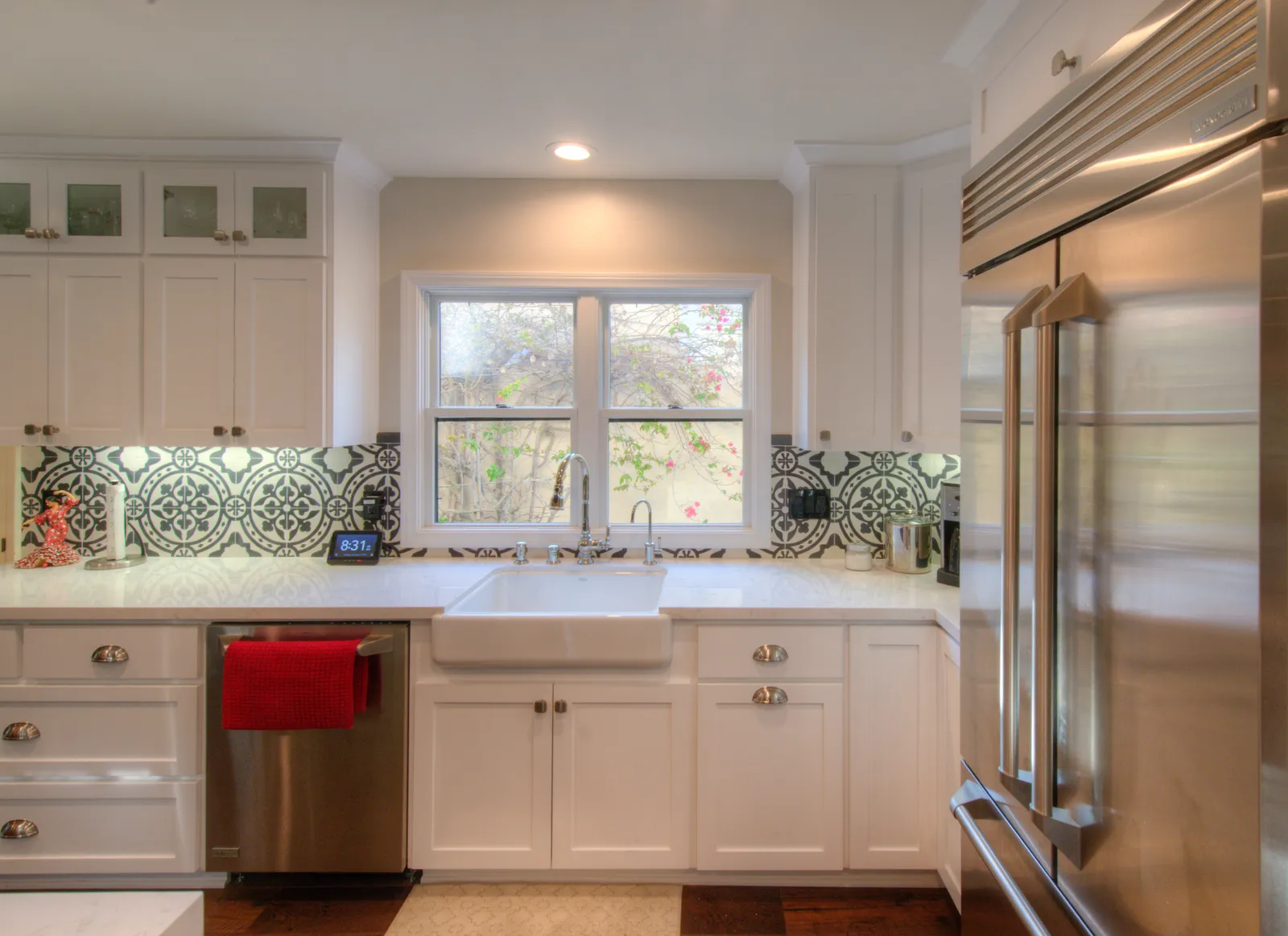
Kitchen trends have a shelf life. Anyone who remodeled in the early 2000s remembers ornate raised panels and heavy glazes; a decade later it was all slab-front gloss. Yet through every cycle, one door style keeps showing up in our project photos, year after year: the shaker.
If you're planning a kitchen right now and worried about choosing something you'll regret, the shaker cabinet is about the closest thing to a safe bet this industry offers. It's worth understanding why.
Born from a philosophy, not a fashion
The shaker door — a flat recessed panel inside a simple five-piece frame — comes from the Shaker religious communities of the 1800s, whose furniture makers held that beauty rests in utility, and ornament is vanity. Every line on the door exists for a structural reason. That's why it never dates: there's nothing on it that belongs to a particular decade. Trends are additions; the shaker is what's left when you subtract.
Why it suits San Diego houses in particular
San Diego's housing stock is famously mixed — Spanish revivals in Kensington, midcentury ranches in Clairemont and Allied Gardens, craftsman bungalows in Mission Hills, new coastal builds in Carmel Valley. The shaker's plainness lets it read as traditional next to arched doorways and as crisp-modern under flat ceilings and big glass. We leaned on exactly that chameleon quality in projects like the ones described in remodeling a mid-century home without losing its soul: the cabinets defer to the architecture instead of competing with it.
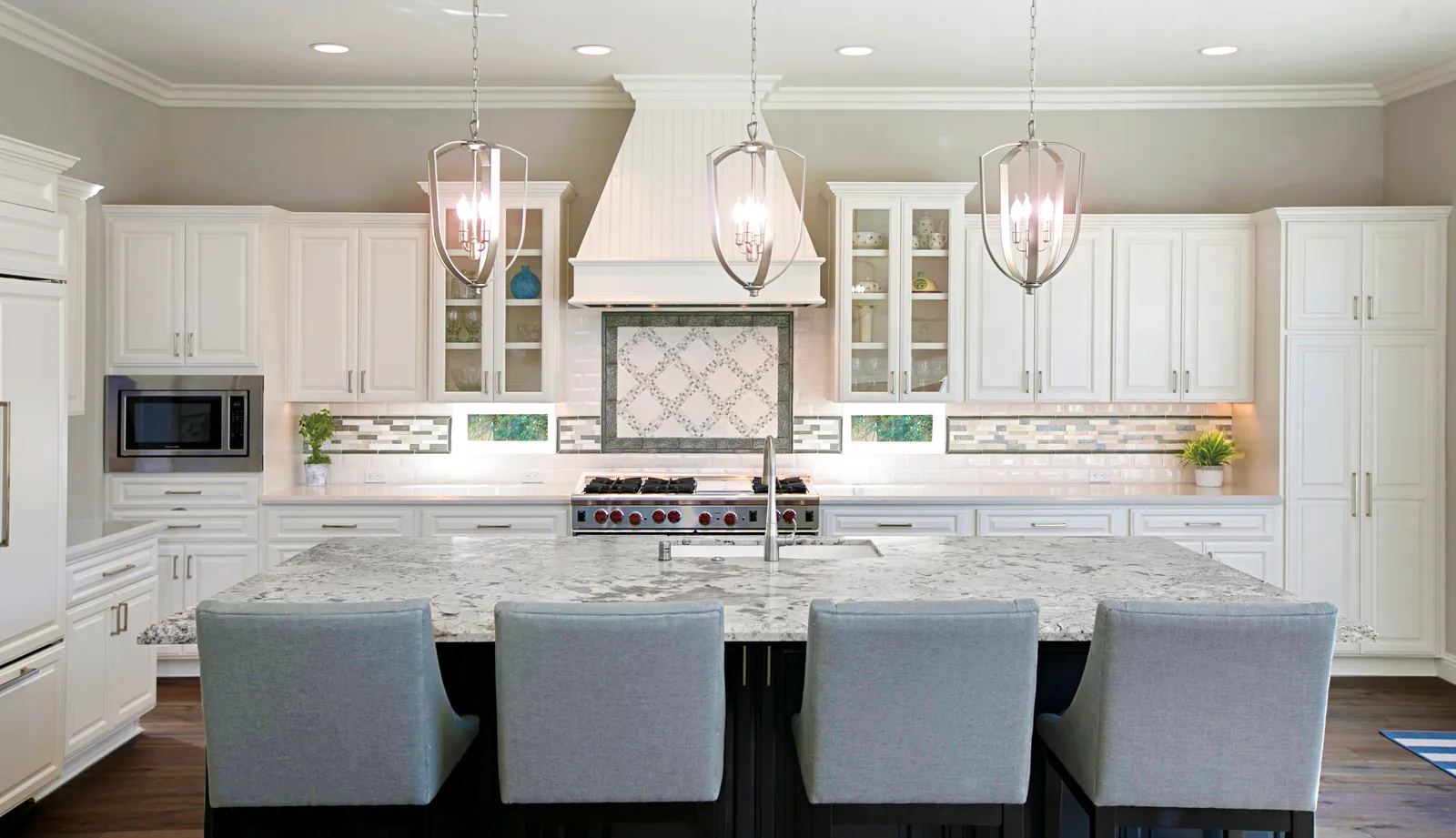
There's a practical coastal argument too. Simple recessed panels collect less dust and salt-air grime than carved profiles, and a well-built painted shaker in a quality finish stands up to the humidity swings between June gloom and Santa Ana weeks better than most detailed doors.
Timeless doesn't mean identical
The fear we hear: "Won't my kitchen look like everyone else's?" Only if you stop at the door style. The shaker is a canvas, and everything around it does the personalizing:
- Color — white is classic, but deep greens, navy, and two-tone schemes (color below, light above) feel current without touching the door itself.
- Hardware — brass, matte black, or unlacquered bronze pulls change the room's whole temperature for the cost of an afternoon.
- Proportion — a slimmer rail-and-stile reads modern; a wider one reads farmhouse.
- Counters and backsplash — the quiet door lets a bolder stone lead, which is exactly the pairing logic from our recent look at choosing kitchen counters.
Because the doors stay timeless, refreshing the kitchen in ten years can mean new hardware and paint rather than new cabinetry — a quiet financial argument no trend can make.
The box matters more than the door
One caution: "shaker" describes only the door. Two kitchens with identical fronts can differ enormously in what's behind them — plywood versus particleboard boxes, soft-close hardware, drawer construction, and how squarely it's all installed. A classic door on a poor box is a costume. In a full kitchen remodel, we spec the parts you don't see with the same care as the parts you do, because that's where the next twenty years live.
Thinking your kitchen is ready for a classic? Start the conversation or give us a call — we'll design a shaker kitchen that's unmistakably yours.
Design · Build · Integration
Let's build something beautiful.
Call (619) 334-3322 or request your free design-build consultation.