
The Homeowner's Guide to Winter Site Protection

San Diego packs most of its annual rainfall into a few winter months, and it rarely sends a calendar invite. If your remodel is mid-construction right now — walls open, roof penetrations cut, windows on order — the difference between a wet week that costs nothing and a wet week that costs real money comes down to how the site was buttoned up before the clouds rolled in.
This is the part of a project homeowners rarely think to ask about, so let's walk through what good winter site protection actually looks like, and what you're entitled to see when you visit your own job.
The house is most vulnerable mid-project
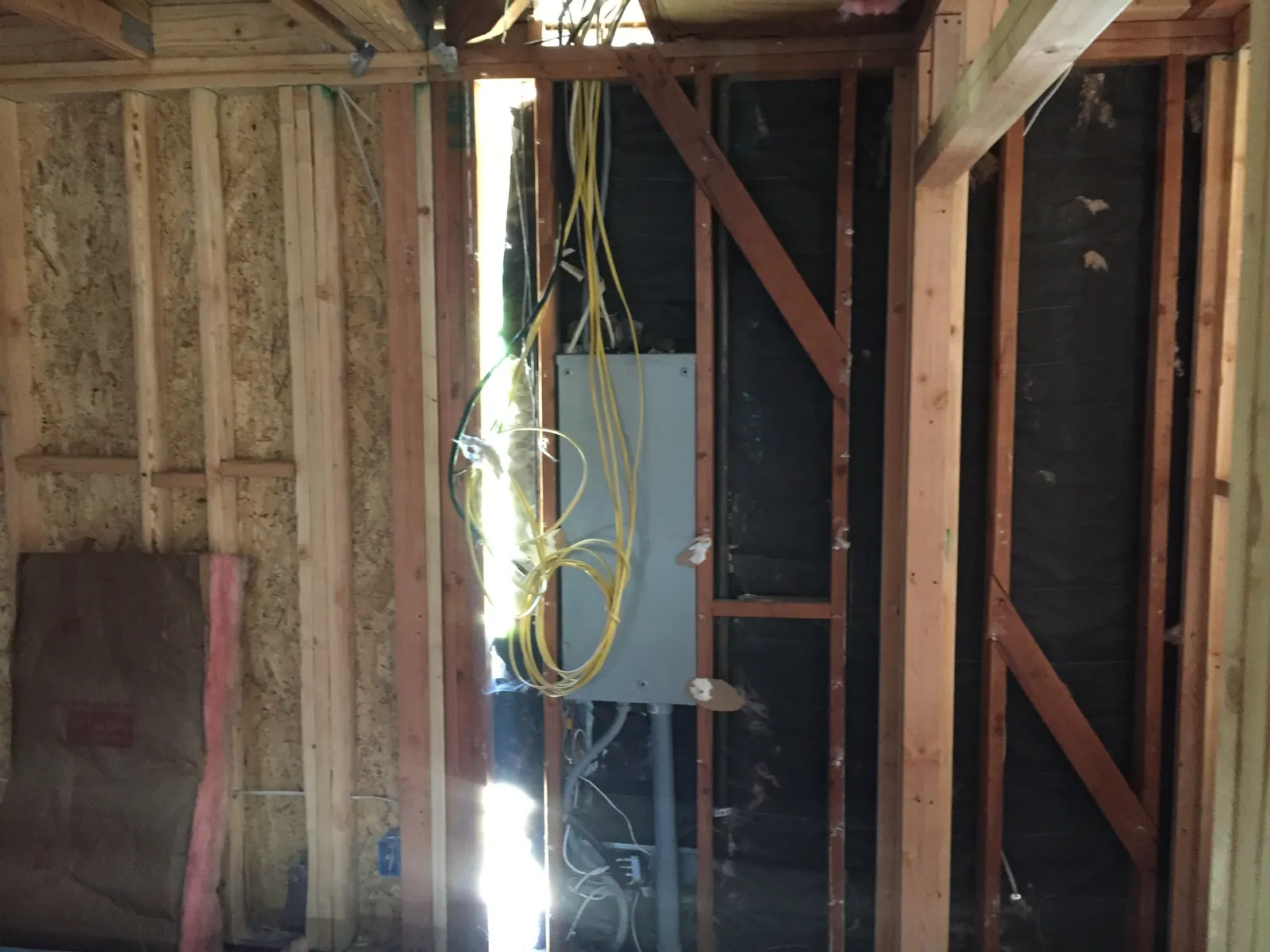
A finished house sheds water by design. A house under construction has had that design deliberately interrupted: roofing pulled back for a skylight, stucco cut for a new header, subfloor exposed where a wall came out. Framing lumber can handle getting damp and drying out. What can't is insulation, drywall, cabinetry, and anything electrical — which is why sequencing matters. A careful builder won't let drywall or finish materials arrive until the building is genuinely weather-tight, even if the schedule is itching to move.
What protection looks like on site
Walk your project before a storm and you should see the basics handled without having to ask:
- Openings shrink-wrapped or covered with lapped, battened plastic sheeting — not a loose tarp tossed over a window hole.
- Roof penetrations temporarily flashed or membraned, not just papered.
- Materials stored off the ground, on dunnage, and covered; lumber banded and sloped to drain.
- Trenches and open footings pumped or covered so inspections aren't delayed by standing water.
- Slopes and bare soil protected with gravel bags or fiber rolls so runoff doesn't carry sediment into the street — the city takes stormwater compliance seriously, and so should your contractor.
Rain days are schedule tools, not schedule excuses
A well-run project plans for weather instead of reacting to it. Exterior work — roofing, stucco, waterproofing — gets front-loaded into dry windows, while interior scopes are held in reserve as rainy-day work. That's one reason we sequence trades the way we do in our process: when a storm parks over the county for three days, the crew shifts inside and the calendar barely notices. It's also why longer material lead times, which most of us have been living with for the past couple of years, get managed by ordering early — a window package that arrives before the rainy season is protection all by itself.
We wrote recently about how quality construction shows up in bad weather on finished homes; the same discipline applies twice over while the home is open.
What to ask your builder this week
Three questions tell you most of what you need to know: Who checks the site before a forecast storm, and when? Where are my materials stored, and how are they covered? And if we get a wet stretch, what work moves inside? Confident, specific answers mean your project is in good hands. Vague ones mean it's time for a closer look.
Planning a remodel that will carry through next winter? Request a consultation or give us a call — we'll build you a schedule that treats the rain as a detail, not a crisis.
Design · Build · Integration
Let's build something beautiful.
Call (619) 334-3322 or request your free design-build consultation.