
Artificial Turf vs. Drought-Tolerant Planting
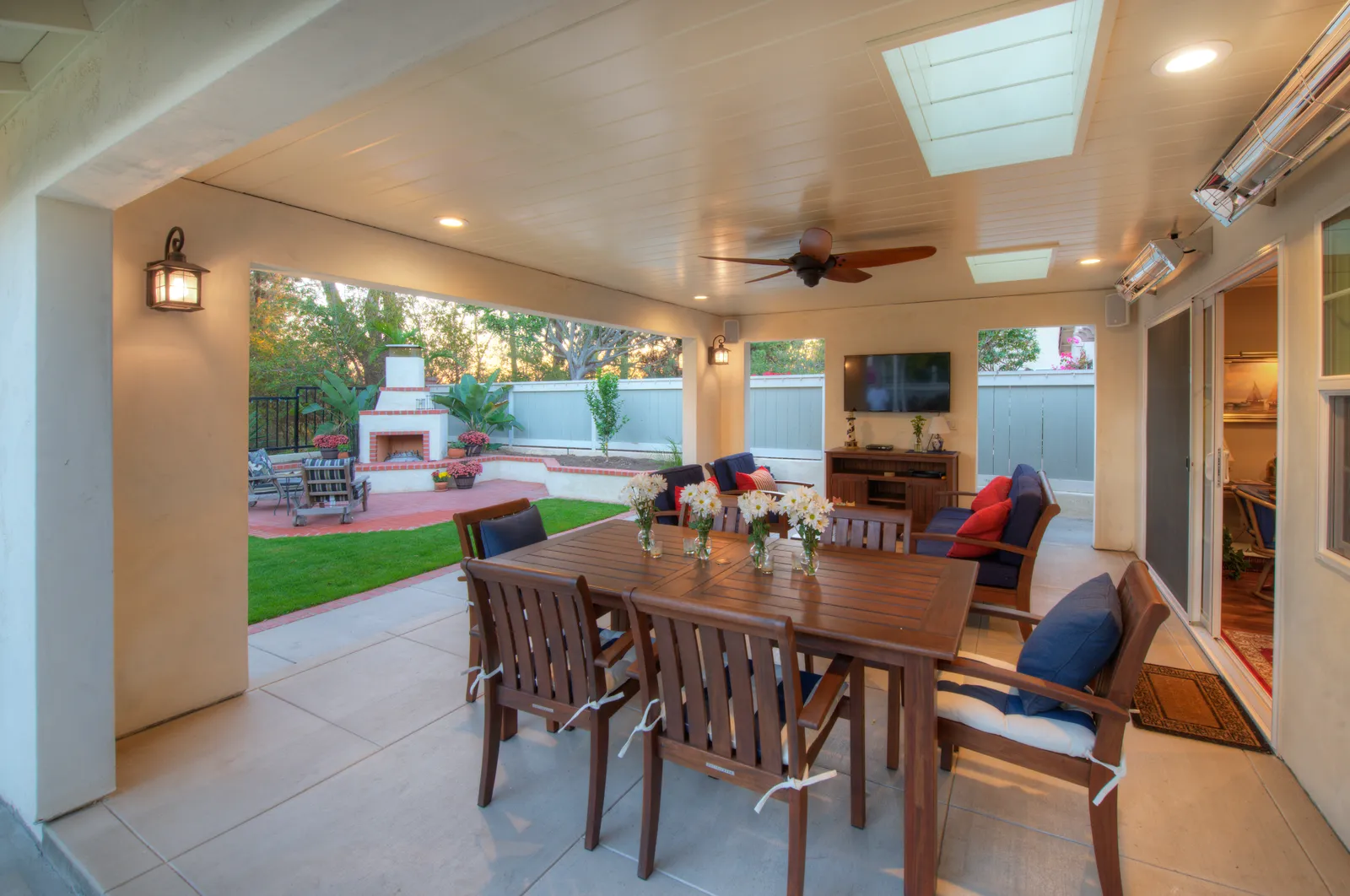
By mid-September, every San Diego lawn has confessed. Months without meaningful rain, a summer of watering restrictions in the back of your mind, and a water bill that climbs every year — if there's a season when homeowners stand on the crunchy remains of their grass and decide something has to change, this is it.
The two paths people consider are artificial turf and drought-tolerant planting, and the internet will happily tell you that one of them is obviously right. It isn't that simple. We've built backyards around both, and the honest answer is that they're good at different jobs. Here's how we help clients think it through.
What turf does well
Artificial turf's pitch is simple: green, flat, and identical in February and August, with no mowing, no watering, and no mud tracked inside. For certain jobs it genuinely delivers:
- Play space. A soft, consistent surface for kids where real grass would be dirt by June.
- Small, hard-working areas. Side yards, dog runs, and the strip between patio and fence where nothing grows well anyway.
- Shade-starved yards. Under a big ficus or on the north side of a two-story home, turf succeeds where grass sulks.
The catch most people learn the hard way is heat. In full sun, turf gets dramatically hotter than living ground cover — uncomfortably hot for bare feet and paws on a summer afternoon, and genuinely punishing during a Santa Ana. Quality matters too: good turf needs proper base preparation and drainage underneath, or you get odors, ripples, and puddles. And it isn't forever; it's a manufactured surface with a lifespan, and it looks its age at the end of it.
What drought-tolerant planting does well
A well-designed native and low-water landscape is the opposite proposition: alive, changing, and cooler. Salvias, agaves, manzanita, and ornamental grasses sip water once established, feed hummingbirds and butterflies, and actually lower the temperature around your patio instead of radiating heat onto it. Done well — and "done well" is the key phrase — it looks intentional and lush, not like a gravel pit with three cacti.
The honest costs: design matters enormously, because random drought-tolerant plants scattered in bark mulch is where the style gets its bad reputation. There's a two-year establishment period when new plants need regular water and some patience. And "low maintenance" is not "no maintenance" — expect seasonal pruning and occasional replacement, just not the weekly mow-and-blow.
Fall, for what it's worth, is the best planting season we have. Put natives in the ground in October or November and winter rain does the establishment watering for you.
The practical tiebreakers
A few questions usually settle it:
- Sun exposure. Full-sun yards in inland neighborhoods like Santee or Rancho Bernardo push hard toward planting; the turf-heat problem is worst exactly where people want turf most.
- Who uses the yard. Daily kid-and-dog traffic favors turf in the play zone. Adults who mostly look at the yard from a patio chair are better served by something living.
- Water math. Both options cut your bill dramatically versus a thirsty lawn. Planting keeps improving as it matures; turf's savings come with an eventual replacement cost.
- The view from inside. Don't forget that the yard is also wallpaper for your kitchen window and living room. A static green rectangle reads flat year-round; a planted garden gives you bloom cycles, movement in the breeze, and birds. If your remodel is opening the back of the house with bigger glass, that view is doing real work.
The answer is usually both
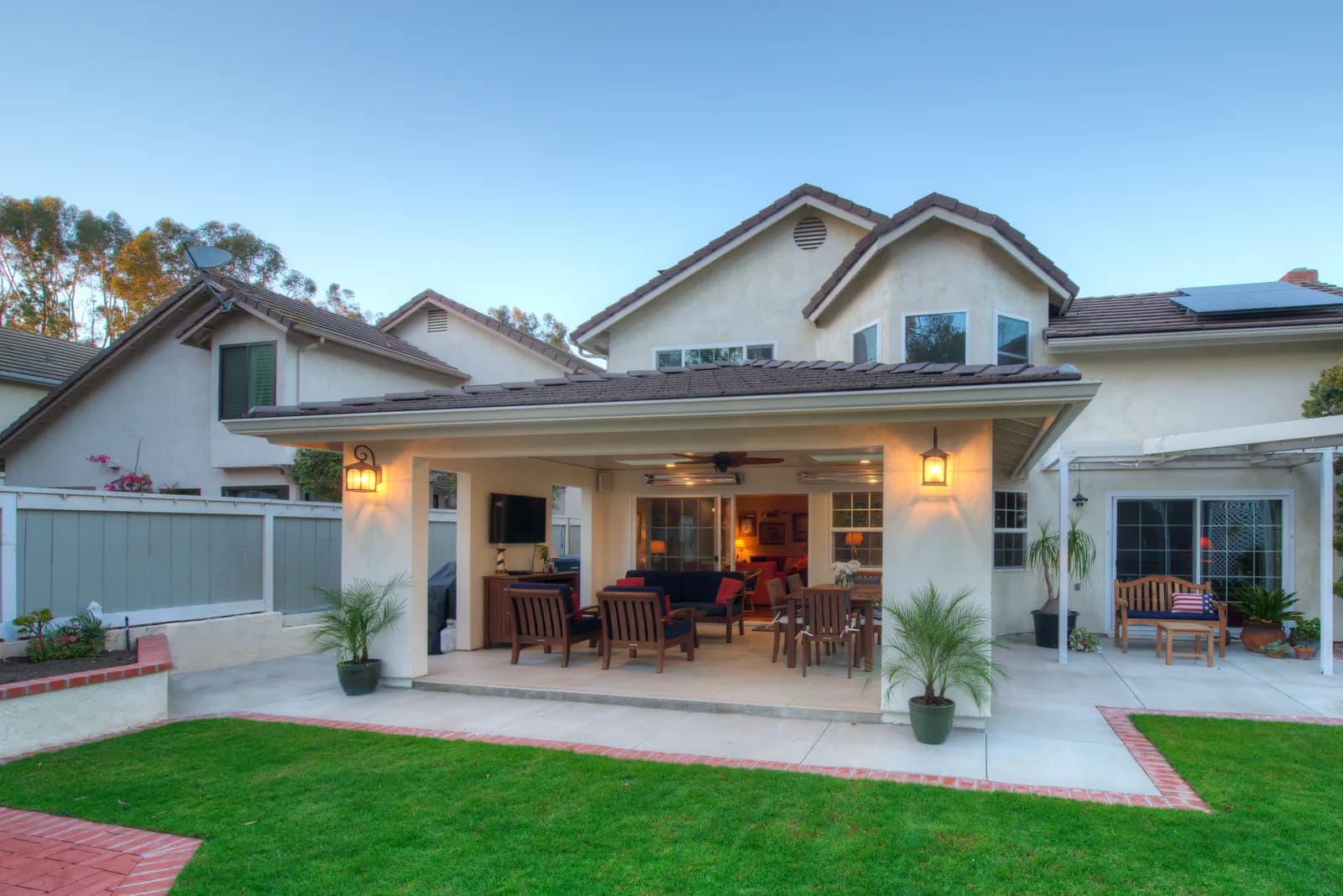
Most of the yards we design don't choose — they zone. A modest rectangle of turf where the play structure lives, drought-tolerant beds carrying the color and texture everywhere else, and hardscape doing the heavy lifting for entertaining. That structure is what turns a backyard into an outdoor room, the same logic behind our decks versus patios comparison: pick the surface for the job, not the ideology.
And whichever way the ground surface goes, the things that make you actually use the yard — shade, seating walls, a fire feature, landscape lighting that extends the evening — deserve equal billing in the plan. That's the whole premise of a designed outdoor living space rather than a re-landscaped lawn.
For a deeper look, see Pool-Adjacent Remodels: Baths, Showers, and Storage.
Thinking about retiring the sprinklers for good? Request a consultation or give us a call — tell us how you want to use the yard, and we'll design the ground plane to match.
Design · Build · Integration
Let's build something beautiful.
Call (619) 334-3322 or request your free design-build consultation.